
Termites are often called “silent destroyers” because they consume cellulose-based materials, primarily wood, from the inside out, often remaining undetected until significant structural damage has occurred. These social insects live in vast colonies with a rigid caste system consisting of a queen, workers, soldiers, and reproductive “swarmers.” While they play a vital ecological role by decomposing dead trees in the insect environment, they become a major threat when they transition into residential structures. Identification often relies on spotting subtle red flags like pencil-sized mud tubes on foundations, discarded wings near windowsills after a swarm, or wood that sounds hollow when tapped with a screwdriver.
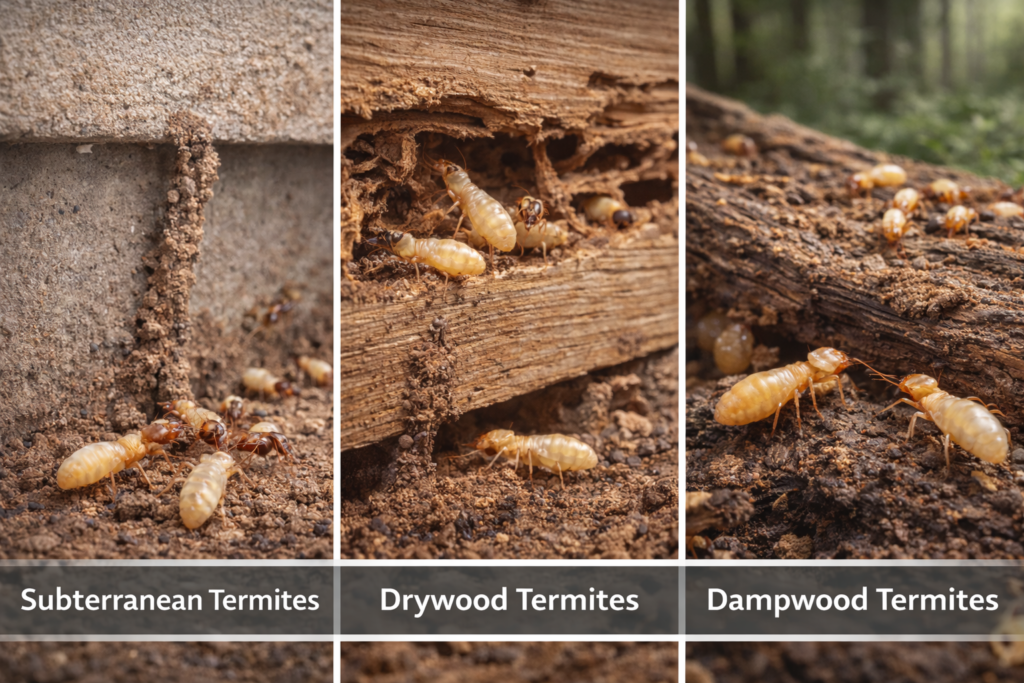
There are three primary types of termites that homeowners must distinguish between: subterranean, drywood, and dampwood. Subterranean termites are the most common and destructive, requiring contact with soil and moisture to survive, which they achieve by building protective earthen tunnels. Drywood termites, conversely, establish colonies entirely within sound, dry lumber and are identified by the presence of “frass”—tiny, sand-like fecal pellets they kick out of their galleries. Dampwood termites are less frequent in homes but thrive in wood with high moisture content, such as that damaged by leaks or in contact with damp earth, making moisture management a critical first step in the scientific study of life and pest prevention.
Effective control and prevention utilize Integrated Pest Management (IPM) to create a multi-layered defense. Prevention strategies include eliminating wood-to-ground contact, fixing plumbing leaks, and maintaining a clear perimeter around the foundation. For active infestations, professional treatments typically involve liquid soil barriers to block subterranean entry or baiting systems that utilize the colony’s foraging behavior to distribute slow-acting termiticides back to the queen. By combining these biological insights with regular structural inspections, you can safeguard your property from the long-term, costly impact of these elusive pests.
What Are Termites? Understanding the Biological Threat to Your Home
Mastering the scientific study of life within your own home begins with identifying the unique biology of termite. Unlike many other wood-boring insects, these creatures are social organisms that operate as a “superorganism,” where a single colony can contain hundreds of thousands of individuals working in total unison. While they are often mistaken for ants, they are actually more closely related to cockroaches, possessing a distinct anatomical structure that allows them to digest cellulose—the primary component of wood.
The “Silent Destroyer”: Why Termite Damage Often Goes Unnoticed
The most dangerous aspect of termites is their ability to remain hidden for years while eating through the structural heart of a building. Because they are photophobic—meaning they avoid light—they rarely crawl on open surfaces, instead hollowing out floorboards, support beams, and wall studs from the inside. By the time a homeowner notices a sagging floor or a bubbling patch of paint, the colony has often been active for a long duration, causing thousands of dollars in hidden structural degradation.
Termite vs. Ant: How to Tell the Difference Under the Microscope
Confusing a winged termite with a flying ant is a common mistake that can lead to a delayed response. When examining a specimen under a microscope, look for three key differences: termite have straight, “beady” antennae rather than elbowed ones, a broad waist instead of a pinched “wasp-waist,” and two pairs of wings that are equal in length. Ants, by contrast, have a very thin petiole (waist) and hind wings that are significantly smaller than their front wings.
The Caste System: Workers, Soldiers, and the Swarmers (Alates)
A colony of termite is divided into specialized roles that ensure the survival of the queen. The pale, soft-bodied workers are responsible for the actual destruction, as they forage for food and maintain the nest. Soldiers, equipped with large mandibles, defend the colony against predators like ants. Finally, the “swarmers” or alates are the winged reproductives that emerge in the spring to mate and start new colonies, serving as the most visible sign that an infestation is nearby.

Identifying the Enemy: Common Types of Termites and Their Habitats
In the scientific study of life, researchers have identified thousands of species, but only a few pose a significant threat to residential structures. Effectively managing termite requires knowing which specific type is attacking, as their nesting habits and moisture requirements dictate the necessary control strategy.
Subterranean Termite: The Mud-Tube Building Invaders
The most widespread and destructive group is the subterranean variety. As their name suggests, these termites live in large underground colonies and require constant contact with soil to maintain the moisture levels they need to survive. They gain access to homes by building pencil-thin “mud tubes” made of soil and saliva. These tunnels act as protected superhighways, allowing them to travel from the ground into your floor joists without being exposed to the dehydrating effects of open air.
Drywood Termite: The Pests Hiding Inside Your Furniture
Unlike their soil-dwelling cousins, drywood termites do not need contact with the earth. They establish their colonies entirely within sound, dry wood, such as attic rafters, door frames, and even expensive hardwood furniture. Because they live deep inside the wood they consume, they are often discovered by the presence of “frass”—tiny, hexagonal fecal pellets that they push out of small “kick-out holes” in the wood surface. These piles of pellets often look like mounds of coarse sand or sawdust.
Dampwood Termite: Why Moisture Is Their Best Friend
Dampwood termite are typically larger than other species but are less likely to be found in modern homes unless there is a significant moisture problem. They specifically target wood with high moisture content, such as logs, stumps, or structural timber that has been softened by water leaks or poor drainage. In the insect environment, they serve as natural decomposers, but in a home, they are a red flag for underlying plumbing or roofing issues that have created the perfect soggy habitat for them to thrive.
Termite Control: How to Spot an Infestation Before It’s Too Late
In the scientific study of life, early detection is the only way to prevent termite from causing irreversible damage. Because these insects work in the shadows, homeowners must become “biological detectives,” looking for the subtle physical evidence left behind by a growing colony.
Visual Red Flags: Mud Tubes, Discarded Wings, and Frass
The most common evidence of an infestation is the presence of mud tubes. These earthen tunnels are built by subterranean termite to bridge the gap between the soil and the wood of your home, protecting them from predators and dry air. Another major red flag is the discovery of discarded wings on windowsills or near light fixtures. These are left behind by “swarmers” (reproductive members) who shed their wings after a brief flight to find a mate and start a new colony. Finally, if you find small piles of sand-like pellets, known as frass, near wooden structures, you likely have drywood termite kicking waste out of their internal galleries.
The Tap Test: Identifying Hollow Wood and Structural Weakness
Since termite consume wood from the inside out, a beam that looks perfectly solid on the surface may actually be a hollow shell. You can identify this hidden damage by performing a “tap test.” Using a screwdriver handle or a small mallet, tap along the length of suspected wooden supports, window frames, and floor joists. A healthy beam will produce a sharp, solid “thud,” while a compromised one will sound hollow or thin. In advanced cases, you may even be able to push the screwdriver directly through the wood with very little pressure, revealing the intricate, maze-like galleries carved out by the colony.
How to Get Rid of Termite: Effective Treatment and Management Strategies
Treating termite requires a strategic shift from simple reactive spraying to advanced, long-term management. Because a colony is a “superorganism,” effective control must target the entire population, including the queen, to ensure the infestation does not simply move to another part of your home.
Conventional Barrier Treatments: Creating a Chemical Shield
The most traditional method for managing termite is the application of a liquid soil-applied barrier. This process involves creating a continuous “chemical shield” around the entire perimeter of your foundation, often through trenching or soil rodding. Modern non-repellent termiticides are designed so that termite cannot detect them; as they crawl through the treated soil, they unknowingly pick up the lethal dose and transfer it to others in the nest. This creates a protective “halo” that prevents underground invaders from ever reaching your structural wood.
Termite Baits: Using Colony Biology for Total Elimination
Baiting systems represent a sophisticated approach that leverages the natural foraging behavior of termite. Strategically placed stations contain cellulose material laced with slow-acting insect growth regulators (IGRs). Workers discover the bait and share it with the rest of the colony through a process called trophallaxis. Because the bait is slow-acting, it doesn’t kill the worker immediately; instead, it disrupts their ability to molt. Over several weeks, this leads to total colony collapse as the younger generations fail to develop and the queen is eventually starved of resources.
Wood Treatment and Non-Chemical Alternatives
For homes in the construction or renovation phase, direct wood treatment is a powerful preventative tool against termite. Borate-based sprays can be applied to raw lumber, penetrating deep into the fibers to make the wood toxic to any insect that attempts to eat it. For those seeking non-chemical options, physical barriers like marine-grade stainless steel mesh or specialized sand barriers (which have grains too large for the pests to move but too small to crawl through) can be installed. In some cases, localized heat treatments or essential oils like orange oil are used for spot-treating drywood colonies, though these are typically supplemental to a broader Integrated Pest Management (IPM) plan.

Termite Prevention: Hardening Your Home Against Future Attacks
Preventing termites from entering your home is significantly more cost-effective than attempting to eradicate them once they have established a colony. By “hardening” your property, you are essentially making the local insect environment inhospitable to these foragers, forcing them to look elsewhere for resources.
Moisture Management: Fixing Leaks and Rerouting Drainage
Moisture is the single most important factor for the survival of subterranean and dampwood termite. To protect your home, you must ensure that water is constantly moving away from your foundation. This involves cleaning gutters regularly, ensuring downspouts extend at least three feet away from the walls, and fixing any leaky outdoor faucets or air conditioning condensation lines. Inside the home, use dehumidifiers in crawlspaces and basements to eliminate the “micro-climates” of high humidity that attract these pests.
Structural Modification: Eliminating Wood-to-Ground Contact
The easiest way for termites to enter a structure is through direct wood-to-soil contact. This often occurs with deck posts, porch stairs, door frames, or wooden siding that touches the earth. To harden your home, maintain a gap of at least six inches between the soil and any wooden components of your house. For gardens, avoid piling mulch directly against the foundation, as mulch retains moisture and provides a protected “bridge” for scouts to bypass your exterior defenses.
Routine Inspections: The Importance of a Professional Perimeter Check
Because termites are masters of concealment, even the most vigilant homeowner can miss the early signs of an invasion. A professional annual inspection is a critical component of Integrated Pest Management (IPM). Experts use specialized tools, such as moisture meters and infrared cameras, to detect activity behind walls that isn’t visible to the naked eye. These routine checks allow for the early identification of mud tubes or structural weaknesses, potentially saving you thousands of dollars in repair costs by catching a colony before it reaches the “silent destruction” phase.
Conclusion: Protecting Your Investment from the Silent Threat
Protecting your property from the long-term impact of termites requires a shift from a reactive mindset to a proactive, lifelong commitment to structural maintenance. In the scientific study of life, we see that these insects are persistent and highly adapted for survival; therefore, your defense strategy must be equally resilient. By combining rigorous moisture control and structural modifications with the advanced technology of modern baiting and barrier systems, you can effectively “harden” your home against the silent threat of the colony. Ultimately, a balanced approach that respects the biological needs of the local insect environment while maintaining a secure, pest-free sanctuary ensures that your home remains a safe and valuable investment for years to come.
FAQs: Top Questions About Termite Safety and Pesticide Use
Are the pesticides used against termites safe for my family and pets? Modern termiticides are highly regulated and, when applied by a licensed professional according to label directions, pose minimal risk. Most structural treatments are applied deep into the soil or inside sealed bait stations, meaning your family and pets have no direct contact with the product. If a liquid barrier is used, it is typically odorless and binds to the soil once it dries.
How long does a typical termite treatment last? The longevity of a treatment depends on the method. Liquid soil barriers are generally effective for 5 to 10 years, depending on soil conditions and moisture levels. Baiting systems, however, require ongoing monitoring and cartridge replacement (usually once a year) to ensure the perimeter remains protected against new colonies.
If I see “swarmers” outside, does it mean my house is infested with termites? Not necessarily, but it is a major warning sign. Seeing winged reproductive specimens outside means there is a mature, healthy colony nearby. Because termites are poor fliers and rely on wind, a swarm in your yard or near your foundation suggests the nest is close enough to potentially reach your home.
Can I treat termites myself with “DIY” products? While you can manage many pests on your own, termites are a different story. “DIY” sprays often only kill the workers you see on the surface, leaving the queen and the rest of the nest deep underground. Professional-grade non-repellent chemicals and specialized equipment are required to ensure the entire colony is eliminated.
What should I do if my neighbor has an infestation? If a nearby property is being treated, you should increase your vigilance. The same environmental factors (moisture, soil type, and wood-to-ground contact) that attracted the pests to your neighbor’s home likely exist on your property. This is the perfect time to schedule a professional inspection to ensure they haven’t already begun exploring your foundation.


