
Mastering the scientific study of life within your own home begins with recognizing that a colony of ants is not just a group of bugs, but a highly sophisticated “superorganism.” These Common Household Pests are defined by their eusocial structure, where a single queen manages reproduction while thousands of sterile workers navigate the insect environment to forage for resources. Identifying ants requires looking for key anatomical markers: “elbowed” antennae, a constricted “wasp-waist” (petiole) with one or two nodes, and a body divided into three distinct regions—the head, thorax, and abdomen.
In the insect environment, the behavior of these foragers is driven by a complex system of pheromone communication that allows a single scout to lead an entire army directly to a food source in your kitchen. Whether they are “pantry prowlers” seeking sugars or “silent destroyers” like carpenter species hollowing out structural wood for nests, these Common Household Pests are masters of environmental adaptation. Their activity is often seasonal, with spring rains driving foragers indoors for dry ground and summer heat increasing the demand for moisture and high-energy proteins within the colony.
To achieve long-term control of ants, you must move beyond simple sprays and embrace Integrated Pest Management (IPM), which focuses on disrupting the biological needs of the colony. This “prevention-first” strategy involves rigorous sanitation to remove food attractants and “exclusion” tactics, such as sealing foundation cracks and utility penetrations to harden your home against Common Household Pests. By utilizing slow-acting baits that worker specimens carry back to the queen, you can collapse the hierarchy of the colony from within, ensuring your living space remains a balanced and pest-free sanctuary.
What Are Ants? Understanding Social Superorganisms
To truly understand the creatures that invade our homes, we must look through the lens of the scientific study of life. A colony is a “superorganism,” a complex system where individuals act like cells in a body, sacrificing their own needs for the survival of the collective. In the insect environment, this level of cooperation allows ants to solve problems that would be impossible for a single insect, from building massive underground cities to coordinating complex foraging raids in your kitchen.
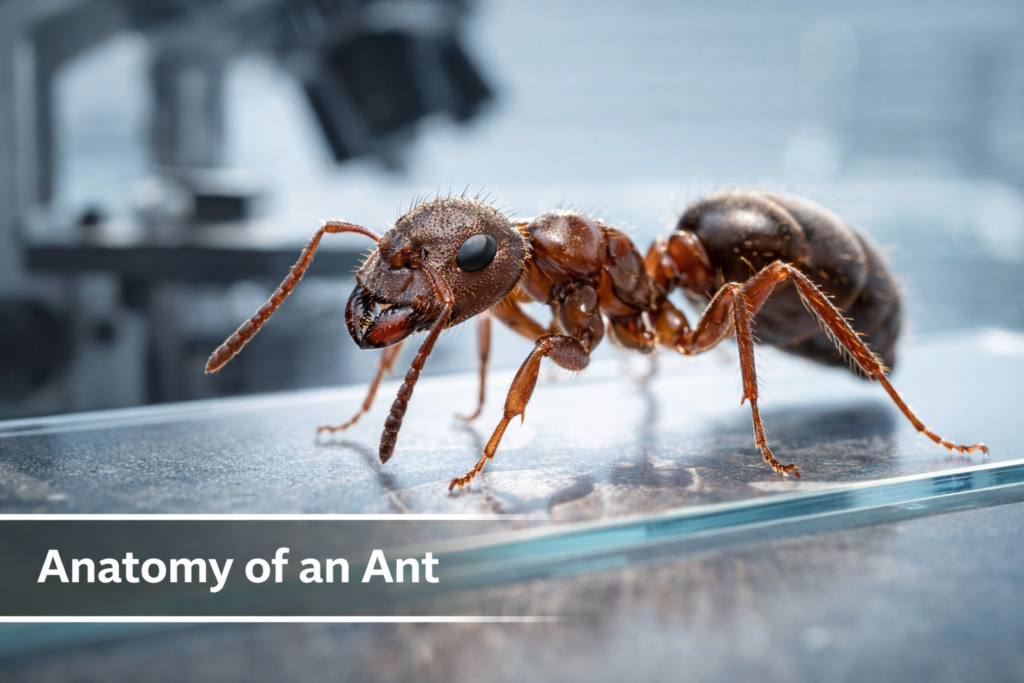
Anatomy of an Ant: What Do They Look Like Under the Microscope?
Under a microscope, the simple “bug” transforms into a marvel of biological engineering perfectly adapted for the insect environment. These foragers are defined by three distinct body segments: the head, the mesosoma (thorax), and the gaster (abdomen).
- The Head: Features “elbowed” antennae, which are the primary sensory organs for smell and touch. You will also see powerful mandibles (jaws) used for everything from crushing food to carrying larvae.
- The “Wasp Waist”: The most identifying feature is the petiole, one or two small nodes that connect the thorax and abdomen, providing the flexibility needed to maneuver in tight spaces.
- The Exoskeleton: A hard, protective outer shell made of chitin that prevents water loss and provides structural support.
The Lifecycle: From Tiny Egg to Household Invader
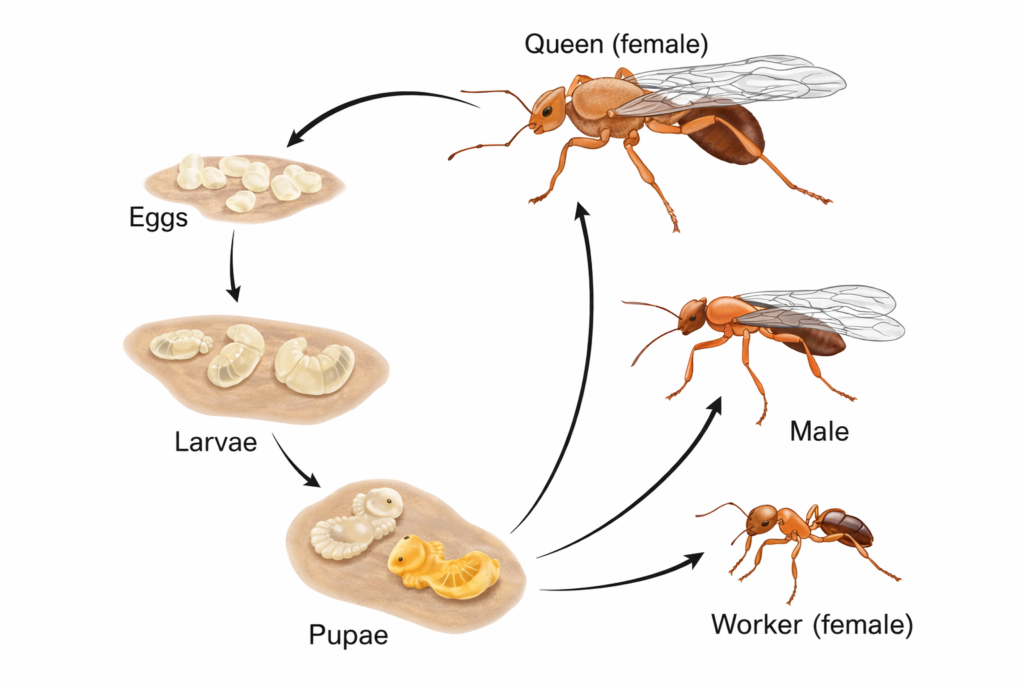
The journey from a microscopic egg to a mature worker is a process of complete metamorphosis that takes place deep within the safety of the nest:
- Egg: Tiny, oval, and white; these are often sticky so workers can carry them in clusters if the insect environment becomes dangerous.
- Larva: A worm-like, legless stage where the primary goal is eating. Workers regurgitate food to feed these “eating machines” within the group.
- Pupa: A transformative stage where the larva spins a cocoon and reorganizes its tissues into an adult form.
- Adult: The fully developed specimen emerges. Based on the food received as a larva, it will become a wingless worker, a winged male, or a future queen.
How Many Are in the World? (The Mind-Blowing Numbers)
The sheer scale of life in our global insect environment is difficult to comprehend. Recent scientific estimates suggest there are roughly 20 quadrillion individuals on Earth. To put that into perspective:
- There are approximately 2.5 million individuals for every single human being alive.
- The total biomass of all ants on Earth exceeds that of all wild birds and mammals combined.
- If you lined up every specimen on the planet, the chain would wrap around the Earth’s equator nearly 8 million times.
Common Species: Identification and Regional Habitats
A successful home defense strategy requires a deep understanding of the specific varieties that inhabit your region. In the scientific study of life, we see how different species have adapted to the unique insect environment of the Midwest and beyond.
Where Do They Live? Mapping Nests in Kansas and Beyond
In Kansas, the insect environment is home to over 100 species, ranging from harmless soil engineers to persistent structural pests.
- Outdoors: Varieties like Harvester and Field specimens create prominent mounds in open grasslands and lawns, often stripping vegetation to create circular nest clearings.
- Indoors: Pavement foragers are famous for nesting under concrete slabs, while Little Black specimens often establish colonies in wall voids and behind kitchen cabinets.
- Moisture Seekers: Carpenter specimens and Odorous House varieties are drawn to water-damaged wood and high-moisture areas like bathroom wall voids.
Fire Varieties in New York and the Midwest: Fact vs. Fiction
There is often panic about fire ants migrating into northern states like New York or Kansas, but the reality is dictated by the biological limits of the insect environment.
- Fiction: Many believe that every “red bug” they see in the North is a dangerous fire variety.
- Fact: In New York, true Red Imported specimens (RIFA) are not currently established because the cold winters freeze the soil deeply enough to kill overwintering colonies.
- The Reality for Kansas: While rare, isolated infestations have been reported as far north as Kansas, often transported through infested nursery stock.
Chinti in Hindi: Cultural Perspectives and Global Diversity
The term “Chinti” is the common Hindi word for ants, reflecting the global presence of these insects. Across the globe, they are often viewed as symbols of hard work and collective strength, representing a vast biological diversity that exceeds 12,000 species worldwide.
- Scientific Names: Whether it’s the Solenopsis or the Camponotus, the naming across different cultures highlights their importance as ecological neighbors.
- Global Biomass: From the forests of India to the plains of Kansas, these creatures make up a massive portion of the Earth’s biomass, serving as essential soil aerators.
Behavior: Why Do They Enter Our Homes?
Understanding the secret life of the colony is the key to managing them. In the scientific study of life, we see that foragers are simply efficient biological machines scanning the insect environment for fuel.
What Do They Eat? The Science of Foraging
The diet of a nest varies by species, but most are opportunistic omnivores.
- The Sugar Rush: Many Common Household Pests crave “honeydew” or spilled soda in your pantry.
- Protein Power: During spring, foraging workers prioritize proteins like grease or meat scraps to feed the growing larvae.
- Social Stomachs: These insects have two stomachs: one for digestion and a “proventriculus” for carrying liquid food back to share through trophallaxis.
Pheromone Trails: How One Scout Leads a Thousand
If you see a single scout on your counter, it is exploring the insect environment. Once it finds food, it lays down a chemical path called a pheromone trail as it returns to the nest.
- The Recruitment Loop: Other workers pick up this scent with their sensitive antennae and follow it, reinforcing the trail with more pheromones.
- Efficiency: This explains why a clean kitchen can be covered in foragers within an hour—the trail acts as a high-speed biological GPS.
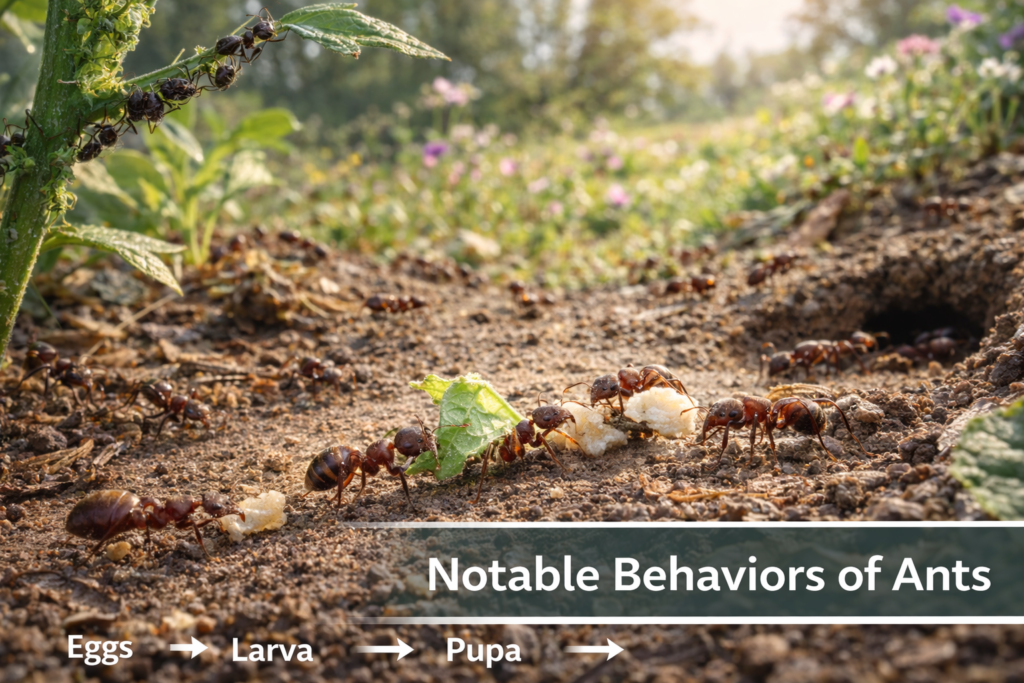
Notable Behaviors: Why Do We Need Them in the Ecosystem?
Despite being Common Household Pests, they are the “engineers” of our planet’s insect environment.
- Soil Aeration: By tunneling, they turn over more soil than earthworms, allowing oxygen to reach plant roots.
- Natural Recyclers: They act as a global cleanup crew, scavenging dead organic matter and turning it into fertilizer.
- Seed Dispersal: Many plants rely on these workers to carry their seeds to new locations, a relationship known as myrmecochory.
Integrated Pest Management (IPM): Managing Safely
Managing your home effectively requires moving away from the “spray and pray” mentality. In the scientific study of life, it is clear that they are highly opportunistic.
Sanitation Secrets: Removing Attraction Points
The most effective way to control an infestation is to eliminate the “fuel” that powers the colony.
- Deep Clean “Hot Zones”: Regularly wipe down areas behind the toaster. Use vinegar to disrupt the pheromone trails workers use to navigate.
- Airtight Storage: Move dry goods into airtight containers. Foragers can easily squeeze through the folds of cardboard boxes.
- Manage Micro-Moisture: Many species are drawn to moisture. Fix leaky faucets to remove the water sources they need.
Exclusion Tactics: How to Seal Your Home from 🐜 Ants
Exclusion is the process of physically “hardening” your home. Precision is key.
- Seal the Envelope: Use silicone caulk to seal gaps around window frames where ants enter.
- Utility Penetrations: Check where plumbing lines enter your home. These are often the “superhighways” for foragers.
- Screen Maintenance: Ensure window screens are tight-fitting to prevent flying specimens from entering.
Habitat Modification: Reducing Activity Outdoors
To stop them from coming inside, manage the insect environment immediately surrounding your foundation.
- The “V-Zone”: Maintain a 12-inch “vegetation-free zone” around your home to remove nesting sites.
- Tree Trimming: Ensure no branches touch the walls. These act as “bridges” for entry.
- Gutter Health: Clogged gutters trap moisture, creating a satellite insect environment.
When to Worry: Distinguishing Household Threats
In the scientific study of life, most species are not pests but vital partners.
Beneficial Roles: Essential Soil Engineers
Outside your walls, they perform “soil engineering” critical to a healthy ecosystem. By tunneling, they aerate the earth and prey on the larvae of flies and fleas.
The Damage Report: When They Become a Problem
- Carpenter Species: These are the “excavators.” They hollow out wood to create galleries, potentially weakening support beams.
- Fire Variety: Known for their aggressive nature, these deliver a painful sting that can cause allergic reactions.
- Pharaoh Variety: A major concern in hospitals because they spread pathogens like Salmonella.
Conclusion: Achieving a Balanced Sanctuary from Ants
Achieving a sanctuary free from ants requires a proactive understanding of the scientific study of life within your own walls. By mastering the biology of the species and identifying attraction factors, you can implement long-term Integrated Pest Management (IPM). Ultimately, the goal is to respect the natural world while keeping them outdoors, ensuring your home remains a healthy, structurally sound sanctuary.
FAQs: Top Questions About Management
- Why do they appear after it rains? Flooding forces the colony to seek higher ground in your crawlspaces.
- Are “big black ones” always Carpenter species? Often. If they are over 1/2 inch with a rounded thorax, they are a structural threat.
- How many are there compared to humans? There are roughly 2.5 million for every human, making your home a natural target for scouts.
- Can I get rid of them using DIY methods? Vinegar disrupts trails, but for a colony, you often need baits that reach the queen.
- Where do they live in Kansas winters? Most go into diapause below the frost line, though those inside heated walls may remain active.


