
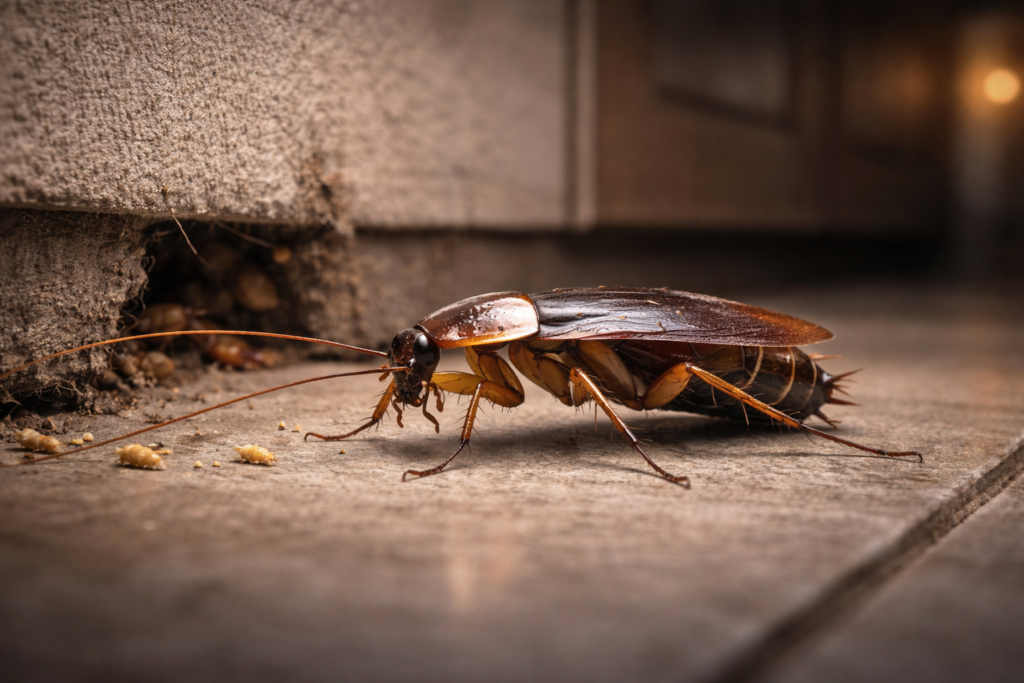
Cockroaches are among the most resilient invaders in the scientific study of life, having survived for millions of years by adapting to almost any insect environment. Known in many cultures as the “Tilchatta,” these pests are defined by their flattened, oval bodies, long filiform antennae, and a shield-like pronotum that conceals their heads. Their biological success stems from an omnivorous diet and a rapid reproductive cycle where females produce protective egg cases called oothecae. Because they are primarily nocturnal and photophobic, they often remain hidden in dark, moist “hot zones” like wall voids and under appliances, making early identification through fecal smears or musty odors essential for preventing a full-scale infestation.
Effective management requires distinguishing between major species, as each has unique environmental preferences that dictate the necessary control strategy. The German cockroach is the most prolific indoor breeder, favoring the warmth and humidity of kitchens, whereas the American cockroach is a larger, winged variety often found in sewers or basements. In contrast, the Oriental cockroaches (or “water bug”) thrives in cool, damp drains, while the Brown-Banded cockroach prefers dry, elevated areas like picture frames and electronics. Understanding these habitats allows for a targeted Integrated Pest Management (IPM) approach, focusing on the specific biological triggers that draw each species into your home.
To achieve total control, you must disrupt the life cycle of the colony using a combination of sanitation, exclusion, and targeted treatments. Integrated Pest Management (IPM) emphasizes removing the three essentials—food, water, and harborage—by sealing cracks with caulk and eliminating standing moisture in drains. Chemical interventions often utilize gel baits and Insect Growth Regulators (IGRs), which break the reproductive cycle by preventing nymphs from molting into fertile adults. By hardening your home’s structure and maintaining rigorous cleaning habits, you can transform your living space into a pest-free sanctuary that is inhospitable to these hardy foragers.
What is a Cockroach? Understanding the Resilience of the “Tilchatta”
The scientific study of life reveals that few creatures can match the sheer endurance of the cockroach. Known in South Asia as the “Tilchatta,” these ancient survivors have roamed the Earth for over 300 million years, predating the dinosaurs. Their success is no accident; it is the result of a biological blueprint designed for extreme resilience, allowing them to thrive in almost any insect environment, from the dampest sewer to the driest kitchen cabinet.
The Anatomy of an Invader: What Does a Cockroach Look Like?
Under a microscope, a cockroach appears as a marvel of evolutionary engineering. Their bodies are divided into three distinct segments: the head, thorax, and abdomen, all protected by a leathery, wax-coated exoskeleton that prevents water loss. A key feature is the pronotum, a shield-like plate that covers the head, making them look headless from above. They possess long, thread-like antennae that serve as high-sensitivity sensors for smell and touch, and at the rear of their abdomen, they have cerci—sensory appendages that detect the slightest vibrations or air currents, acting as a biological early-warning system against predators.
The Cockroaches Family Tree: Evolution and Global Diversity
The lineage of the cockroaches is vast, with over 4,500 species identified worldwide. While most people only encounter the few species that become household pests, the majority of the family tree consists of beneficial forest-dwellers that act as essential decomposers. In the scientific study of life, research suggests that common pests like the German species evolved from wild ancestors in Asia over 2,100 years ago, eventually spreading globally via human trade routes. This global diversity is a testament to their ability to adapt to varying climates, though they remain most successful in warm, humid environments where they can breed continuously.
Survival Secrets: Why These Pests Are Hard to Kill
A cockroach is famously difficult to eliminate due to a “toolkit” of extreme survival traits. They can survive for up to a week without a head because they breathe through small holes in their body called spiracles and have a decentralized nervous system. Furthermore, their flexible exoskeleton allows them to withstand compression forces up to 900 times their body weight, making them nearly “un-squishable.” Perhaps most impressive is their ability to thrive on a diet of almost anything—from glue and cardboard to soap—and their rapid development of resistance to common chemical sprays, which makes a professional Integrated Pest Management (IPM) approach necessary for total control.
Identifying Your Enemy: The 4 Major Types of Cockroaches
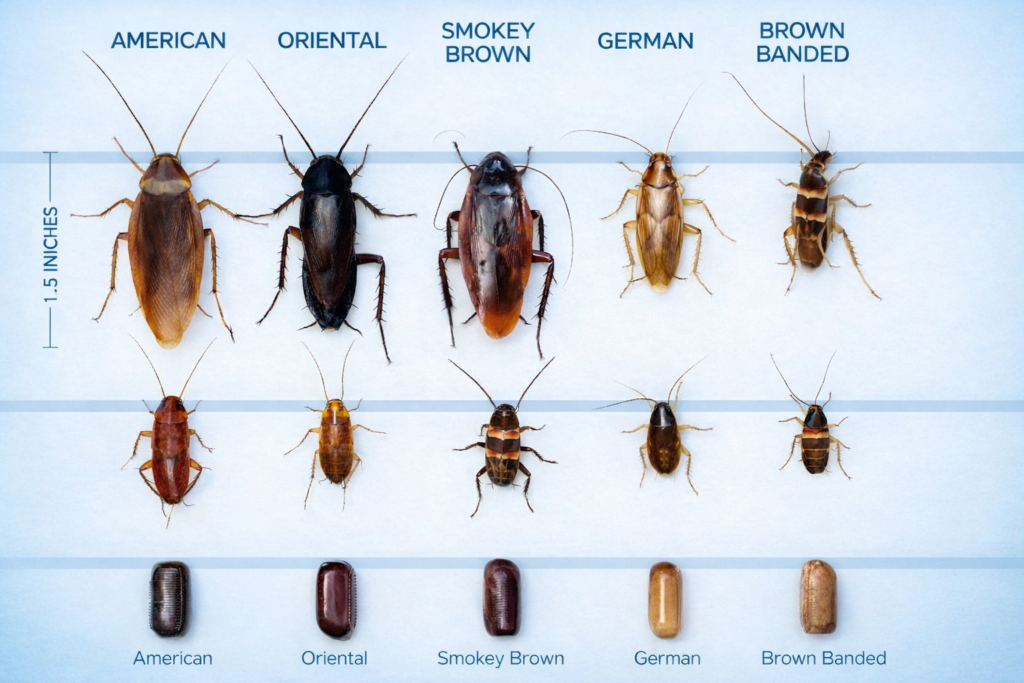
In the scientific study of life, identifying the specific species in your home is the first step toward effective management. Each of these foragers has unique biological requirements, meaning a strategy that works for one may fail for another.
The German Cockroaches: The King of Kitchen Infestations
The most common species found worldwide is the German cockroach. These small, tan insects are easily identified by two dark, parallel stripes running down their pronotum (the shield behind the head). They are prolific breeders, with a single female capable of sparking an infestation of thousands in just a few months. Because they have a high demand for moisture and warmth, they are almost exclusively found in kitchens and bathrooms, hiding in the narrowest cracks near sinks, dishwashers, and ovens.
The American Cockroach: Large, Winged, and Stealthy
Often called a “water bug” or “palmetto bug,” the American cockroach is the largest of the common house-infesting species, growing up to two inches in length. They are reddish-brown with a yellowish figure-eight pattern on the back of their heads. While they prefer damp, outdoor environments like mulch beds and sewers, they frequently migrate indoors via plumbing lines or drains. Unlike their smaller cousins, both males and females have fully developed wings and are capable of short, gliding flights when temperatures are high.
The Oriental Cockroach: The “Water Bug” of Damps and Drains
The Oriental cockroach is a dark, glossy species that is often nearly black in color. They are stocky and slower-moving than other varieties, preferring the cool, damp “insect environment” of crawlspaces, basements, and floor drains. Because they are so dependent on water, they are rarely found in the upper levels of a home unless there is a significant plumbing leak. They are notorious for producing a strong, musty odor that can permeate a room as the colony grows.
The Brown-Banded Cockroach: The Small Specialist of Dry Areas
The Brown-Banded cockroach is often confused with the German variety due to its small size, but it lacks the dark stripes and instead features two light-colored bands across its wings and abdomen. This species is unique because it prefers dry, warm locations and does not require the same constant moisture as others. You are likely to find them in “high” spots—behind picture frames on walls, inside electronics like clocks or TVs, and in the upper corners of closets or bedrooms.
The Red Flags: How to Spot an Infestation Early
In the scientific study of life, identifying a cockroach problem early is the only way to stop a small group of foragers from turning into a massive infestation. Because these insects are masters of concealment, you must look for the “calling cards” they leave behind in the dark.
Beyond the Sighting: Identifying Droppings and Smears
One of the most reliable signs of a cockroach presence is their waste. Small species, like the German variety, leave behind droppings that resemble ground black pepper or coffee grounds, often clustered in the corners of drawers or on top of kitchen cabinets. Larger species, such as the American or Oriental cockroach, produce solid, cylindrical droppings with ridges along the sides, which can be mistaken for mouse pellets but lack the pointed ends. In areas with high moisture, you may also find dark, irregular smear marks along baseboards and wall-floor junctions where their bodies have dragged through water and oils.
The Egg Case (Ootheca): Spotting the Next Generation
A single female cockroach doesn’t lay individual eggs; instead, she produces a protective, capsule-like case called an ootheca. These leathery, purse-shaped cases vary by species: a German cockroach carries a tiny, tan, ridged case until it’s ready to hatch, while an American species will glue its dark reddish-brown case in a hidden spot near a food source. Finding these empty or full cases in your pantry, behind appliances, or in the folds of cardboard boxes is a major red flag that the colony is actively reproducing and growing within your home.
Nocturnal Activity: Finding “Hot Zones” in Your Home
Because a cockroach is naturally photophobic, they are most active 2 to 4 hours after the lights go out. To find their “hot zones,” you should inspect areas that provide warmth, moisture, and darkness. Common hiding spots include the compression motors behind refrigerators, the underside of sinks where condensation forms, and the warm internals of electronics like microwaves or internet routers. If you see a cockroach scurrying across the floor during the day, it is often a sign of a severe overpopulation, as the strongest foragers have pushed the weaker ones out of the primary hiding spots into the light.
Why Do I Have Cockroaches? The Biological Triggers
In the scientific study of life, we find that these pests do not enter a home by chance; they are highly evolved sensors for survival. An infestation is almost always triggered by the presence of three biological essentials: food, water, and harborage. While a clean home is a great deterrent, even a microscopic amount of grease behind a stove or a slow drip under a sink can sustain a small colony for weeks. These foragers are opportunistic, meaning they are constantly scanning the insect environment for any lapse in sanitation or structural integrity that allows them to gain a foothold.
The Three Essentials: Food, Water, and Harborage
The primary driver for any cockroach is the search for “fuel.” They are omnivorous scavengers that can find nutrition in hair, glue, and even cardboard if traditional food sources are unavailable. However, water is often their most urgent need; certain species are so dependent on moisture that they rarely stray far from damp pipes or floor drains. Once they find a reliable source of both, they seek “harborage”—tight, dark spaces where their bodies can touch both the top and bottom of a surface (a trait called thigmotaxis), which provides them with a biological sense of security.
Entry Points: How Small Roaches Squeeze Into Your Sanctuary
Because of their flattened bodies and flexible exoskeletons, a small forager can squeeze through a gap as thin as a credit card. Common entry points include the gaps around utility pipes, space under exterior doors, and even the “bridge” created by tree branches touching a roof. In many urban environments, they are also “hitched” into the home inside grocery bags, cardboard shipping boxes, or used appliances. Once a single fertile female or an egg case enters through these structural weak points, the local insect environment provides everything needed for a population explosion.
How to Get Rid of Cockroaches: Proven Elimination Strategies
To achieve total elimination of a cockroaches colony, you must move beyond temporary surface sprays. Effective management relies on understanding their communal habits and utilizing products that exploit their natural social interactions to ensure the entire population—including the queen and nymphs—is neutralized.
Baiting Logic: Using Social Biology for Total Kill
Gel baits are the gold standard for managing a persistent infestation. Unlike contact sprays, baits are designed to be slow-acting, allowing the forager to consume the toxin and return to its hiding spot. Because these insects are necrophagous (they eat their dead) and coprophagous (they eat feces), the bait is passed through the entire group in a “domino effect.” This secondary kill ensures that even the most reclusive members of the cockroach nest, who never leave the wall voids, are effectively reached and eliminated.
Growth Regulators (IGRs): Breaking the Reproductive Cycle
One of the most powerful tools in the scientific study of life and pest management is the Insect Growth Regulator (IGR). These compounds act like “birth control” for the colony. Instead of killing the insect instantly, IGRs mimic juvenile hormones, preventing nymphs from molting properly into fertile adults. You can often tell an IGR is working when you see adults with twisted or crinkled wings; these individuals are sterile and cannot reproduce, effectively putting an expiration date on the entire cockroaches population.
Non-Chemical Controls: Trapping and Vacuuming Techniques
For immediate reduction in numbers, mechanical removal is a highly effective, non-toxic strategy. Using a vacuum cleaner equipped with a HEPA filter allows you to physically remove large clusters of adults, nymphs, and egg cases from “hot zones” behind appliances. Additionally, placing sticky traps (monitors) in dark corners serves two purposes: it reduces the active population and helps you identify which specific areas of the insect environment require the most intensive treatment.

Controlling Cockroaches for Good: Long-Term Prevention (IPM)
Achieving a pest-free sanctuary requires moving beyond temporary fixes and embracing Integrated Pest Management (IPM). This “prevention-first” strategy focuses on hardening your home against the cockroach by altering the biological conditions that allow a colony to survive. By systematically removing the essentials—food, water, and shelter—you can ensure long-term control of any forager that attempts to enter your living space.
Sanitation Secrets: Eliminating Micro-Food Sources
In the scientific study of life, it is understood that even a microscopic film of grease can sustain a small group of foragers for weeks. To break the cycle, you must look beyond surface cleaning and focus on “hidden” food sources. This includes deep-cleaning the space behind the stove, wiping down the interior of toaster trays, and ensuring pet food is never left out overnight in open bowls. Storing all dry goods in airtight glass or plastic containers prevents the cockroach from detecting the chemical signals of a potential meal.
Moisture Management: Drying Out the Drains and Pipes
Water is often the most critical resource for the survival of a cockroach colony. Many species, particularly the Oriental variety, are highly sensitive to dehydration and will abandon a site if it becomes too dry. To manage this, fix any leaky faucets immediately and ensure that under-sink cabinets remain bone-dry. Using a mesh drain cover can prevent foragers from migrating through the plumbing, while insulating “sweating” cold-water pipes removes the condensation that serves as a vital watering hole in the insect environment.
Structural Exclusion: Sealing the Cracks and Crevices
Exclusion is the process of physically “locking” the forager out of your home. Because their flexible exoskeletons allow them to squeeze through gaps as thin as 1/16th of an inch, precision is key. Use high-quality silicone caulk to seal the spaces where baseboards meet the floor and where cabinets meet the wall. Pay special attention to “utility penetrations”—the holes where electrical wires and plumbing pipes enter the walls—as these are the primary superhighways used by the cockroach to move between rooms.
Conclusion: Maintaining a Healthy, Roach-Free Environment
Maintaining a healthy, roach-free environment requires a proactive commitment to Integrated Pest Management (IPM) that moves beyond temporary fixes to address the biological triggers of an infestation. In the scientific study of life, it is well-documented that these foragers are not only structural nuisances but also significant sources of allergens and pathogens within the insect environment. By consistently eliminating access to food, managing moisture in high-risk “hot zones,” and physically hardening your home through structural exclusion, you disrupt the colony’s ability to survive and reproduce. Ultimately, this “prevention-first” approach transforms your living space into a sustainable, pest-free sanctuary, ensuring your home remains a healthy and secure investment for your family.
FAQs: Top Questions About Cockroach Safety and Management
Are the pesticides used against cockroaches safe for my family and pets? Modern treatments like gel baits and Insect Growth Regulators (IGRs) are highly targeted and generally considered safer than traditional broadcast sprays. When applied correctly into cracks and crevices, they minimize the risk of accidental contact. For those seeking even lower-impact options in the insect environment, botanical insecticides derived from oils like rosemary or peppermint offer effective alternatives with less synthetic residue.
Is it true that a cockroach can live for a week without its head? Yes, this is a biological fact. Because they have a decentralized nervous system and breathe through small holes called spiracles along their body segments, they do not need a head to respire. They eventually die only because they lack a mouth to drink water, proving just how resilient the cockroach family is compared to other household pests.
Why do I see more foragers after I start using bait? This is actually a sign that your management strategy is working. Most baits contain attractants that lure the insects out of their hidden “hot zones.” While it may seem like the population is increasing, you are simply seeing the hidden members of the colony emerging to feed on the bait, which they will then carry back to neutralize the rest of the nest through social interaction.
Can these pests cause asthma or other health issues? In the scientific study of life, researchers have confirmed that the proteins found in the saliva, droppings, and shed skins of a cockroach are potent allergens. Inhaling these airborne particles can trigger severe asthma attacks, especially in children. Maintaining a clean, dry home is not just about aesthetics; it is a vital health measure to reduce these biological triggers.
How quickly can a single forager start a full infestation? A single female German cockroach can be the starting point for a massive problem. She carries an egg case (ootheca) containing up to 40 eggs and can produce several of these in her lifetime. Under ideal conditions with plenty of food and water, one fertile female can lead to a population of thousands within a single year, which is why immediate action is necessary.


