
The scientific study of life has reached a pivotal moment in 2026, where we now recognize that the survival of our global ecosystems rests upon the intricate patterns of insects behavior. This field of study extends far beyond simple observation, encompassing everything from the neurological pathways that drive a solitary forager to the complex swarm intelligence of a billion-member colony. By mapping how these small wonders interact with their environment, researchers are uncovering the biological blueprints that maintain the delicate balance of our planet’s biodiversity and resource management.
The economic significance of these organisms cannot be overstated, as the scope of insects behavior directly influences the stability of the world’s food supply and industrial innovation. Pollination alone contributes hundreds of billions of dollars to the global economy, a feat made possible only by the specialized floral consistency and navigation skills of bees and butterflies. Furthermore, the way insects solve structural and mechanical problems—such as the climate-controlled architecture of termite mounds—is currently inspiring a new generation of bio-mimetic engineering and sustainable building designs that reduce our carbon footprint.
Transitioning into the future of pest management, the importance of insects behavior lies in our ability to replace toxic chemical reliance with high-precision, behavior-based interventions. By exploiting natural communication signals, such as pheromone disruption or acoustic masking, we can protect vast agricultural landscapes while preserving the beneficial species that are essential for soil health. This master guide explores the vast horizon of behavioral ecology, proving that the smallest actions in the insect world often carry the greatest weight in the survival of our modern civilization.
Defining the Horizon: What is the Real Scope of Insects Behavior?
The scientific study of life has expanded significantly, moving beyond simple observation to a multi-dimensional analysis of how neural pathways and environmental stimuli dictate insects behavior. In 2026, the scope of this field encompasses everything from individual molecular responses to the massive collective intelligence of global “superorganisms.” By defining this horizon, we can begin to understand how these creatures solve complex engineering, navigation, and survival problems that have baffled scientists for centuries.
Beyond the “Tilchatta”: The Multi-Dimensional Study of Life
While many people first encounter insects through common household pests like the cockroach (locally known as the Tilchatta), the actual scope of insects behavior reaches into every corner of the Earth’s biosphere. Modern research now categorizes these actions into distinct dimensions: physiological, ecological, and social. This means that a single movement—such as a beetle’s flight—is analyzed not just as a mechanical act, but as a response to internal hunger cues and external pheromone signals, providing a holistic view of how life persists in even the harshest climates.
Behavioral Ecology: Understanding Evolutionary Adaptation in 2026
In the current year, behavioral ecology has become the primary lens through which we view insect behavior as a tool for long-term evolutionary survival. As climate patterns shift, we are observing rapid adaptations in how insects migrate, forage, and protect their young. This “evolution in real-time” allows scientists to predict how biodiversity will change over the next decade, ensuring that conservation efforts are directed toward the species that play the most critical roles in maintaining our natural food chains and soil health.
Sensory Perception: How Insects Map the World Around Them
The most fascinating aspect of the scope of insects behavior is the sensory “hardware” these creatures use to navigate their surroundings. Unlike humans, insects perceive the world through polarized light, magnetic fields, and microscopic chemical receptors on their antennae. By mapping these sensory inputs, we can understand how a honeybee finds its way back to a hive from miles away or how a predator detects the heat signature of its prey, leading to breakthroughs in high-precision GPS and autonomous drone technology.
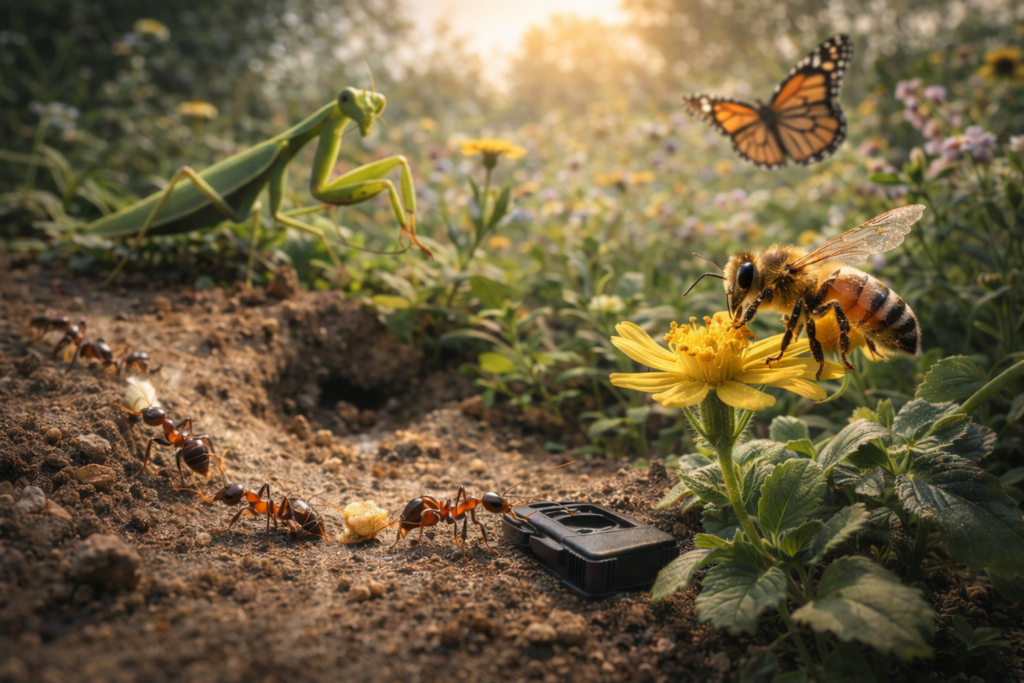
The Economic Engine: Why Insect Behavior is Vital for Global Agriculture
n the scientific study of life, we have discovered that the global economy is intrinsically linked to the daily routines of the insect world. The importance of insects behavior in 2026 cannot be overstated, as it acts as a silent engine driving the success of nearly every major crop on Earth. By understanding how these organisms interact with our food systems, we can move away from expensive, harmful chemical inputs and toward a more profitable, bio-balanced agricultural model.
The Pollination Powerhouse: Securing the World’s Food Supply
Pollination is perhaps the most critical example of insects behavior impacting human survival, as one out of every three bites of food we eat depends on it. Honeybees, butterflies, and even certain beetles exhibit high “floral fidelity,” a behavioral trait where an individual stays loyal to one type of plant, ensuring successful fertilization. This consistent movement between blossoms contributes over $200 billion annually to the global economy by securing the yields of high-value crops like almonds, coffee, and cocoa.
Bio-Inspired Pest Monitoring: Outsmarting Foragers Before They Strike
Modern agriculture has shifted from “reactive spraying” to “predictive monitoring” by decoding the cues of insects behavior before an infestation occurs. In 2026, farmers use “smart traps” that mimic the pheromones of a female moth or the specific light frequencies that attract a hungry beetle. By understanding these forager instincts, we can pinpoint the exact moment a pest population begins to rise, allowing for highly targeted interventions that save millions in potential crop loss while minimizing environmental impact.
Beneficial Predators: Harnessing Hunting Instincts for Natural Protection
The predatory side of insects behavior offers a “natural security force” for our fields through the use of biological control agents like ladybugs and lacewings. Instead of using pesticides, growers now release these beneficial insects to exploit their natural hunting instincts against aphids and mites. Because these predators have evolved highly specialized searching patterns and venomous or mechanical killing techniques, they can maintain a “zero-pest” environment far more effectively—and cheaply—than synthetic alternatives.
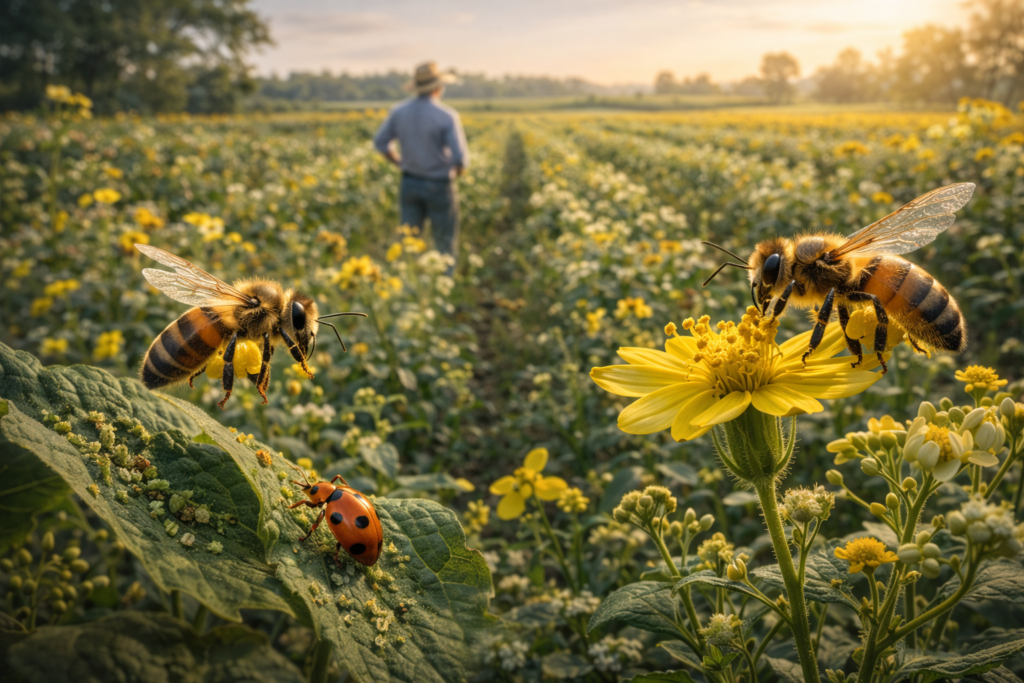
The Scientific Study of Life: From Neural Pathways to Global Ecosystems
In the scientific study of life, moving from the microscopic firing of a single neuron to the massive movement of a global migration reveals the true scale of insects behavior. This field has evolved in 2026 to bridge the gap between biology and technology, showing that these organisms are not just programmed automatons but sophisticated processors of information. By analyzing how a brain the size of a pinhead can navigate across continents or manage a colony of millions, we are unlocking secrets that redefine our understanding of intelligence itself.
Cognitive Frontiers: Learning, Memory, and Decision Making
Recent breakthroughs in insect behavior have shattered the myth that invertebrates lack complex thought, proving instead that they possess remarkable cognitive flexibility. Honeybees, for example, have demonstrated the ability to understand the concept of “zero” and can be trained to solve basic string-pulling tasks to reach a reward. This capacity for learning and memory allows individual insects to evaluate risks, such as predator presence, against potential rewards like high-quality nectar, making real-time decisions that ensure their personal and genetic survival.
Swarm Intelligence: Using Social Behavior to Revolutionize Modern Robotics
Engineers are increasingly looking toward the collective insect behavior of ants and termites to solve the world’s most difficult logistical problems through “swarm robotics.” By mimicking the decentralized way a colony functions—where no single leader gives orders, but every individual follows simple local rules—we are developing autonomous drone fleets for search-and-rescue and environmental monitoring. These robots communicate through digital “pheromones,” allowing a thousand small machines to work together as a single, highly efficient unit to map disaster zones or plant forests.
Environmental Triggers: How Climate Change Alters Behavioral Patterns
The importance of monitoring insect behavior has reached a critical point in 2026 as shifting global temperatures alter the “biological clocks” of many species. We are seeing “phenological mismatches,” where insects emerge from hibernation before their host plants have flowered, or migratory species like the Monarch butterfly changing their flight paths due to erratic wind currents. Understanding these behavioral shifts is essential for predicting which ecosystems are at risk of collapse and how we must adapt our conservation strategies to protect the pollinators that sustain us.
Applied Solutions: Using Insect Behavior for Total Pest Management
In the scientific study of life, shifting our focus from simple elimination to a deep understanding of insects behavior represents the most significant advancement in modern pest control. This evolution allows us to outsmart pests by targeting their biological “triggers” rather than relying solely on broad-spectrum chemicals. By decoding the specific ways a forager communicates, navigates, and reproduces, we can implement high-precision strategies that manage the insect environment with intelligence and environmental responsibility.
Pheromone Technology: Disrupting Communication for Sustainable Control
The use of pheromone technology is a prime example of how manipulating insect behavior can lead to total pest management without toxic residues. By deploying synthetic “mating disruptors” into an area, we can flood the air with female scent signals, making it impossible for males to locate a mate and thus preventing the next generation from ever forming. This targeted approach is highly effective for protecting large-scale orchards and vineyards, as it specifically neutralizes the target pest while leaving beneficial pollinators and natural predators completely unharmed.
The IPM Revolution: Behavior-Based Strategies Over Chemical Force
The move toward Integrated Pest Management (IPM) marks a revolutionary shift where we prioritize the modification of insects behavior through environmental “hardening” and exclusion techniques. Instead of waiting for an infestation to occur, we use our knowledge of a pest’s preference for specific light frequencies or moisture levels to create inhospitable zones. By removing the behavioral rewards that attract a colony—such as accessible food waste or standing water—we can force a population to relocate or collapse naturally, achieving a 100% pest-free environment through biological strategy rather than chemical force.
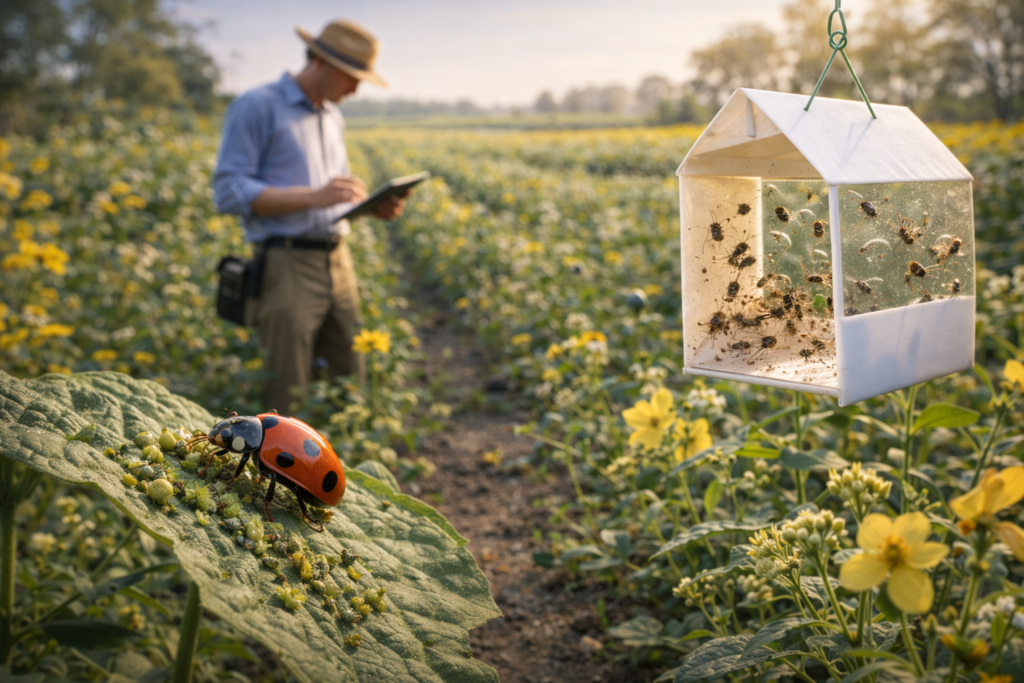
The Medical and Industrial Scope: Secrets Hidden in Secretions and Skills
In the scientific study of life, the scope of insect behavior extends far beyond the fields and into the laboratories of our most advanced medical and industrial centers. These organisms have spent hundreds of millions of years perfecting chemical compounds and structural techniques that we are only now beginning to decode. By studying how an insect produces silk, processes venom, or builds a climate-controlled home, we are finding the blueprints for the next generation of human technology and medicine.
Pharmaceutical Potential: Venom, Silk, and Defensive Chemistry
The defensive side of insects behavior has gifted modern medicine with a massive library of bioactive compounds that are currently being trialed for life-saving treatments. Research in 2026 has shown that the antimicrobial peptides found in certain beetle secretions are effective against drug-resistant “superbugs,” while the venom of wasps is being adapted into targeted therapies that can kill cancer cells without harming healthy tissue. Even the production of spider silk—a behavioral feat of protein engineering—is being used to create biocompatible sutures and synthetic tendons that are stronger than steel yet flexible enough for the human body.
Bio-Mimicry: Engineering the Future Based on Six-Legged Design
Industrial innovation is increasingly being driven by bio-mimicry, where we copy the physical and navigational insect behavior to solve human engineering challenges. Architects are studying the self-cooling ventilation systems of African termite mounds to design skyscrapers that require zero air conditioning, drastically reducing global energy consumption. Meanwhile, the specialized “gripping” behavior of beetle feet has inspired a new class of industrial adhesives and climbing robots capable of inspecting bridges and wind turbines with a level of safety that was previously impossible.
Conclusion: The Growing Importance of Behavioral Literacy in a Changing World
In the scientific study of life, the transition into 2026 has proven that achieving behavioral literacy is no longer just an academic pursuit but a global necessity for environmental and economic survival, as mastering the nuances of insects behavior allows us to predict how shifting climates will impact food security and protect the delicate pollination networks that sustain billions. This literacy enables a shift from “blind extermination” to “informed co-existence,” where we use the insects’ own biological blueprints to solve critical challenges in medicine, carbon-neutral architecture, and sustainable pest management. By valuing these small wonders as sophisticated biological partners rather than mere pests, we unlock a library of evolutionary solutions that ensure a resilient and technologically advanced future for the generations to come.
FAQs: Top Questions on the Scope and Value of Studying Insects
Why is the scope of insect behavior suddenly so important for technology? Insects are the world’s most efficient “biological computers,” solving complex navigation and structural problems with minimal energy. By studying insects behavior, engineers are developing “swarm robotics” for search-and-rescue and high-precision sensors for autonomous vehicles that mimic the way a honeybee tracks movement or a moth detects chemical signals in the dark.
How does studying these organisms help with global food security? The importance of insect behavior is most visible in our fields, where pollination and natural pest control are worth billions. By understanding the “floral fidelity” of bees, we can design landscapes that maximize crop yields; similarly, by studying the hunting patterns of predatory insects, we can reduce our reliance on synthetic pesticides, ensuring a safer and more sustainable food supply.
Can the study of insects really lead to medical breakthroughs? Yes, the biochemical scope of insects behavior is a goldmine for the pharmaceutical industry. Many insects produce unique defensive chemicals, such as antimicrobial peptides or specialized venoms, which are currently being studied to create new antibiotics and targeted cancer treatments that are more effective than traditional laboratory-synthesized drugs.
Does climate change affect how we study these behaviors? Climate change has made behavioral literacy a top priority, as shifting temperatures are causing “phenological mismatches” where insects emerge at the wrong time for their host plants. Monitoring insect behavior allows scientists to create early-warning systems for ecosystem collapse, helping us intervene before critical pollination networks or soil-building cycles are permanently broken.
What is the “Economic Value” of an insect’s daily routine? When we calculate the “ecosystem services” provided by insect behavior, the value exceeds trillions of dollars globally. This includes free labor for pollination, the natural recycling of waste into fertile soil, and the suppression of agricultural pests, proving that protecting these small wonders is one of the most profitable investments we can make for the planet’s future.


