
I honestly believe that once the heavy lifting of spring is over, many beekeepers make the mistake of shifting into “autopilot,” but this is exactly when summer management of honeybee colonies becomes the deciding factor for your honey harvest. From my experience, the summer months present a unique paradox: the bees are at their peak population and activity, yet they face the brutal combination of scorching temperatures and potential nectar dearths. If you aren’t vigilant, the same colony that was booming in May can quickly collapse or abscond due to heat stress or lack of resources.
Successfully navigating the summer management of honeybee colonies requires a transition from growth-focused care to production and survival strategies. I’ve always felt that the “Golden Rule” of summer is maintaining a balance between maximum foraging space and optimal hive temperature. This means being proactive with your supering to prevent overcrowding while ensuring the bees have the ventilation and water access they need to keep the brood nest cool. Without this balance, your bees will spend more energy “fanning” and cooling the hive than they will collecting the nectar you’re counting on.
Ultimately, mastering the summer management of honeybee colonies is about protecting the “liquid gold” your bees have worked so hard to create. This guide will walk you through the technical nuances of managing heat, monitoring for late-season pests, and ensuring your bees stay motivated during the intense heat of July and August. By the time the season shifts toward autumn, your proactive approach will have ensured not only a record-breaking honey crop but also a resilient, healthy population ready for the winter ahead.
2.Why Summer Beekeeping Management is the Key to a Surplus Harvest
I honestly believe that summer is where the “heavy lifting” of the bees either turns into a full honey house or a missed opportunity. From my experience, summer beekeeping management is the key to a surplus harvest because it ensures your massive workforce stays focused on storage rather than survival during the high-heat months. If you neglect summer management of honeybee colonies, the bees may consume their own winter stores during a nectar dearth or, worse, decide to abscond if the hive becomes an oven. By proactively managing space and resources now, you ensure that every drop of nectar collected during the peak flow is surplus for you, rather than just maintenance for them.
3.Decoding Honeybee Behavior: Foraging, Brood Patterns, and Bearding
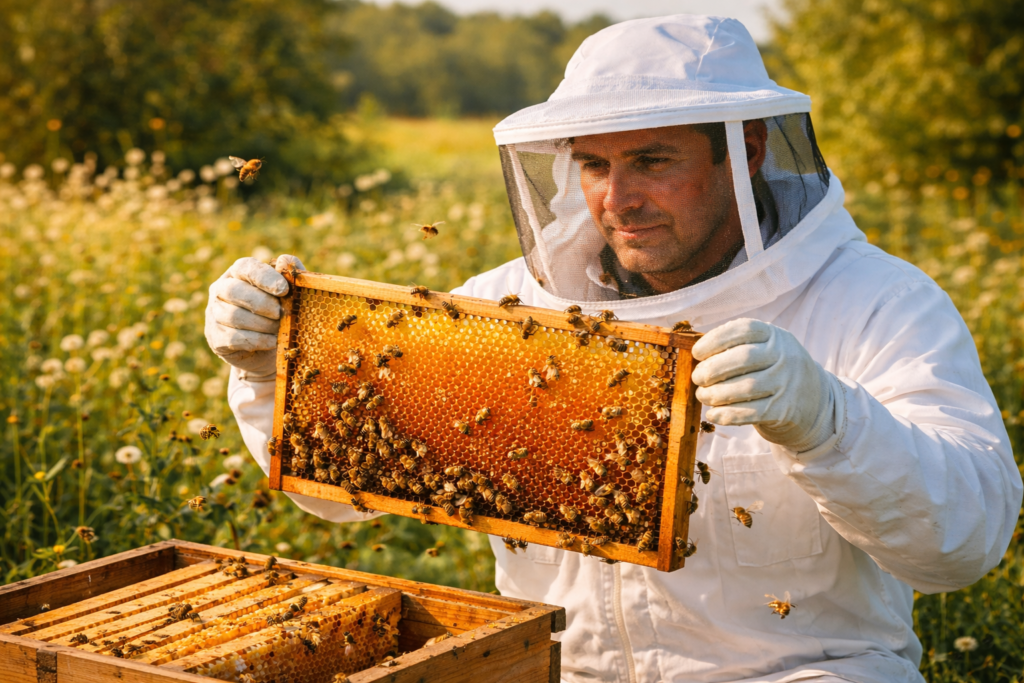
I honestly believe that becoming a “bee whisperer” starts with understanding that their behavior is a direct reaction to their environment. From my experience, summer management of honeybee colonies requires you to distinguish between normal seasonal shifts and signs of distress. During this time, you’ll notice foraging activity shifts to the early morning and late evening to avoid the midday heat, while the queen’s brood rearing patterns may naturally slow down as the hive prioritizes honey storage over population growth. Perhaps the most striking sight is “bearding”—where thousands of bees hang on the outside of the hive like a literal beard; while this can look like a swarm is imminent, it’s usually just a clever ventilation behavior to reduce the internal temperature and create more space for air circulation inside the brood nest.
4.Protecting Honeybee Colonies from Heat Stress: Ventilation and Shade Strategies
I honestly believe that protecting honeybee colonies from heat stress is the most overlooked task of the season, yet it is vital for preventing your bees from literally melting under the sun. From my experience, effective summer management of honeybee colonies starts with strategic hive placement; providing dappled shade during the brutal afternoon hours can drop the internal temperature of a hive significantly. To assist with cooling, I recommend improving hive ventilation by propping up the inner cover with small wooden shims or using screened bottom boards to allow for a vertical “chimney effect” of airflow. By taking these simple steps to mitigate heat, you save your bees from the exhausting task of water hauling and fanning, allowing them to redirect that energy toward honey production.

5.Essential Water Management for Bee Colonies in Hot Weather
I honestly believe that a beehive in July is essentially a giant evaporative cooler, and without a reliable source of moisture, the entire system breaks down. From my experience, water management for bee colonies is non-negotiable because bees use water to regulate the internal temperature of the brood nest through evaporative cooling. If you don’t provide a safe, consistent water source near the apiary, your bees will be forced to travel long distances or, worse, visit the neighbor’s swimming pool, which often leads to conflict. I’ve found that the most effective way to handle this during summer management of honeybee colonies is to use shallow containers filled with rocks or floating corks, ensuring the bees can drink their fill without the risk of drowning.
6.Supering and Space Management: Timing the Summer Nectar Flow
I honestly believe that supering during summer nectar flow is as much an art as it is a science. From my experience, the goal is to provide enough room for the incoming nectar without giving the bees so much empty space that they lose control over the hive’s internal climate. In the context of summer management of honeybee colonies, I use the “rule of two-thirds”: when the bees have filled roughly 70% of their current top super with nectar and white wax, it is time to add the next one. This prevents the hive from becoming “honey-bound,” a condition where the bees store nectar in the brood nest because they’ve run out of room, which can lead to late-season swarming and a significant drop in your total honey production season management.

7.Summer Feeding of Honeybee Colonies: Navigating the Summer Dearth
I honestly believe that the “summer dearth”—that dry period when the spring blooms fade and the heat kills off nectar-producing flowers—is the most dangerous time for a hungry hive. From my experience, summer feeding of honeybee colonies becomes a rescue mission during these weeks; without intervention, a booming population can starve in the middle of July. When managing your summer management of honeybee colonies (1), it is vital to check the weight of your hives; if they feel light, you should provide a thin 1:1 sugar syrup to keep the queen laying and the workers from consuming your surplus honey. However, you must be careful to use internal feeders rather than open-air feeding to prevent a “robbing frenzy” from neighboring hives, which is a common hazard in summer management of honeybee colonies (2).
8.Summer Pest Control in Honeybee Colonies: Varroa, Wax Moths, and Small Hive Beetles
I honestly believe that heat and humidity don’t just affect the bees—they create a “perfect storm” for pests that can dismantle a hive in weeks. From my experience, summer pest control in honeybee colonies (3) is often the most labor-intensive part of the season because you are fighting on three different fronts simultaneously. While your bees are busy foraging, Varroa mites are breeding rapidly in the capped brood, and opportunistic scavengers like wax moths and small hive beetles are waiting for the colony to show a single sign of weakness.
To keep your apiary secure during summer management of honeybee colonies (4), I recommend a disciplined approach to these three major summer threats:
- Varroa Mite Monitoring: This is the most critical time for an alcohol wash. If your mite count exceeds 2–3%, you must treat immediately, but you have to be careful—many treatments (like formic acid) cannot be used in extreme heat or while honey supers are on.
- Wax Moth Prevention: I’ve found that wax moths are only a threat to weak or “roomy” hives. The best defense is keeping your colonies strong and removing any frames that the bees cannot actively guard and patrol.
- Small Hive Beetle (SHB) Control: These pests thrive in the warmth. I use oil traps or unscented “beetle towels” in the top corners of the hive. Additionally, keeping hives in sunlight rather than deep shade helps discourage SHB from multiplying.
9.Preventing Absconding in Summer: Tactical Management to Retain Your Bees
I honestly believe there is nothing more disheartening than opening a hive only to find it completely empty because your bees decided the neighborhood was no longer livable. From my experience, preventing absconding in summer is a distinct challenge compared to spring swarming; while swarming is about reproduction, absconding is a desperate flight for survival due to poor hive conditions. In the context of summer management of honeybee colonies (5), bees usually “abandon ship” because of extreme heat, lack of water, or a severe pest infestation like small hive beetles or wax moths.
To ensure your bees stay put, I recommend several tactical adjustments to your summer management of honeybee colonies summer management of honeybee colonies :
- Reduce Hive Stress: Ensure the hive isn’t sitting in a “heat trap.” If the internal temperature becomes unbearable, the colony may leave in search of a cooler cavity.
- Maintain Constant Resources: A hive that feels it is starving during a dearth is a flight risk. Keeping a steady supply of water and supplemental feed if necessary is a key part of bee colony summer care (7).
- Stay Ahead of Pests: A heavy mite load or a hive “slimed” by beetle larvae will trigger an immediate exit. Regular inspections and early intervention are your best defense.
10.Managing Weak and Strong Bee Colonies: Strategic Equalization for Apiary Balance
I honestly believe that even experienced beekeepers can get caught off guard by the unique “traps” that the high heat of July and August sets for an apiary. From my experience, the most frequent errors in summer management of honeybee colonies (12) include poor ventilation, which forces bees to stop foraging to cool the hive, and a lack of a reliable water supply, causing brood dehydration. Another common mistake is late supering; if you wait until a hive is completely full to add space, the bees will feel “honey-bound,” leading to a sudden loss of foragers through late-season swarming or absconding. By avoiding these common pitfalls and staying disciplined with your summer beekeeping management (13), you ensure your colonies remain productive and focused on the nectar flow rather than simple survival.
11.Avoiding Common Pitfalls in Summer Hive Management
I honestly believe that even experienced beekeepers can get caught off guard by the unique “traps” that the high heat of July and August sets for an apiary. From my experience, the most frequent errors in summer management of honeybee colonies (12) include poor ventilation, which forces bees to stop foraging to cool the hive, and a lack of a reliable water supply, causing brood dehydration. Another common mistake is late supering; if you wait until a hive is completely full to add space, the bees will feel “honey-bound,” leading to a sudden loss of foragers through late-season swarming or absconding. By avoiding these common pitfalls and staying disciplined with your summer beekeeping management (13), you ensure your colonies remain productive and focused on the nectar flow rather than simple survival.
12.The Transition: Preparing Honeybee Colonies for Late Summer and Autumn
I honestly believe that the end of August is the true “New Year” for a beekeeper, as the choices you make now determine if your bees will survive the winter. From my experience, summer management of honeybee colonies (14) must shift seamlessly into preparation for the cooler months by focusing on “fat bees”—the long-lived winter workers that the queen starts laying in late summer. This transition involves a meticulous post-harvest management plan; once you remove your honey supers, you must immediately address any lingering pest issues and ensure the colony has enough time to cure and store a final round of nectar or syrup. By prioritizing colony bees maintenance (15) during this seasonal shift, you ensure the hive isn’t just surviving the summer heat, but actively building the biological reserves needed for the challenges of autumn.
13.Conclusion: Ensuring Colony Health and Productivity Year-Round
I honestly believe that successful summer management of honeybee colonies is the ultimate bridge between a record-breaking harvest and a struggling apiary. From my experience, the intense heat of July and August is the true test of a beekeeper’s foresight; by prioritizing consistent water sources, strategic hive ventilation, and timely pest control, you are doing more than just “keeping bees”—you are protecting a high-performance biological engine. As we have seen, the difference between a hive that thrives and one that absconds often comes down to the small, disciplined actions you take during these peak months. By staying proactive with your summer beekeeping management, you ensure that your colonies remain healthy and resilient, effectively securing both a surplus of honey and the long-term vitality of your bees for the seasons to come.
14.FAQs: Master How to Manage Honeybee Colonies in Summer
- How often should I inspect my hives in the summer? During peak summer beekeeping management (18), I recommend inspecting every 10–14 days. This is frequent enough to monitor for summer pest control in honeybee colonies (19) and honey storage without over-stressing the bees or disrupting the hive’s internal temperature too often.
- What is “bearding” and should I be worried? Bearding is a natural ventilation behavior where bees cluster on the outside of the hive to stay cool. It is usually not a cause for alarm, but it is a sign that you should check for improving hive ventilation (20) or adding more space to prevent overcrowding.
- How much water does a honeybee colony need in summer? A single colony can collect up to a liter of water a day during extreme heat for evaporative cooling. Consistent water management for bee colonies (21) is vital; if their source runs dry, the brood can quickly overheat and die.
- Can I harvest honey in the middle of summer? Yes, if your supers are at least 80% capped. However, for effective post-harvest management, ensure you leave enough for the bees to survive a potential summer dearth or be prepared for summer feeding of honeybee colonies (22).
- What causes bees to abscond in the summer? Preventing absconding in summer (23) requires managing high mite loads, extreme heat, and lack of resources. If the hive becomes “unlivable” due to pests or temperature, the colony will abandon the hive entirely.


