
1. Introduction: Why Strategic Seasonal Management is the Heart of Beekeeping (honeybee colony)
I’ve always found it fascinating that a honeybee colony is less like a static pet and more like a living, breathing calendar. I honestly believe that seasonal management of honey bees is the true heart of beekeeping because it requires you to anticipate the needs of the hive before the bees even know they have them. If you’re just reacting to what you see today, you’re already behind; successful beekeeping is about looking six weeks into the future to ensure the colony has the right population and resources for the upcoming environment.
From my experience, the secret to high-level seasonal management of honey bees lies in syncing your actions with the local bloom and weather patterns. It isn’t just about opening the box to check for the Queen; it’s about understanding that a colony needs a completely different set of “care instructions” in the damp chill of early spring than it does in the sweltering heat of mid-July. Without a strategic seasonal plan, you run the risk of losing your bees to avoidable issues like starvation in the winter or losing your entire honey crop to a swarm in the spring.
In this guide, we are going to break down the essential steps for seasonal management of honey bees to help you keep your colonies healthy and productive year-round. We’ll explore how to manage the explosive growth of the spring, the intense production of the summer, and the critical preparations needed for winter survival. My goal is to help you move away from “panic beekeeping” and toward a proactive style of management where you are always in tune with the natural rhythm of the hive.
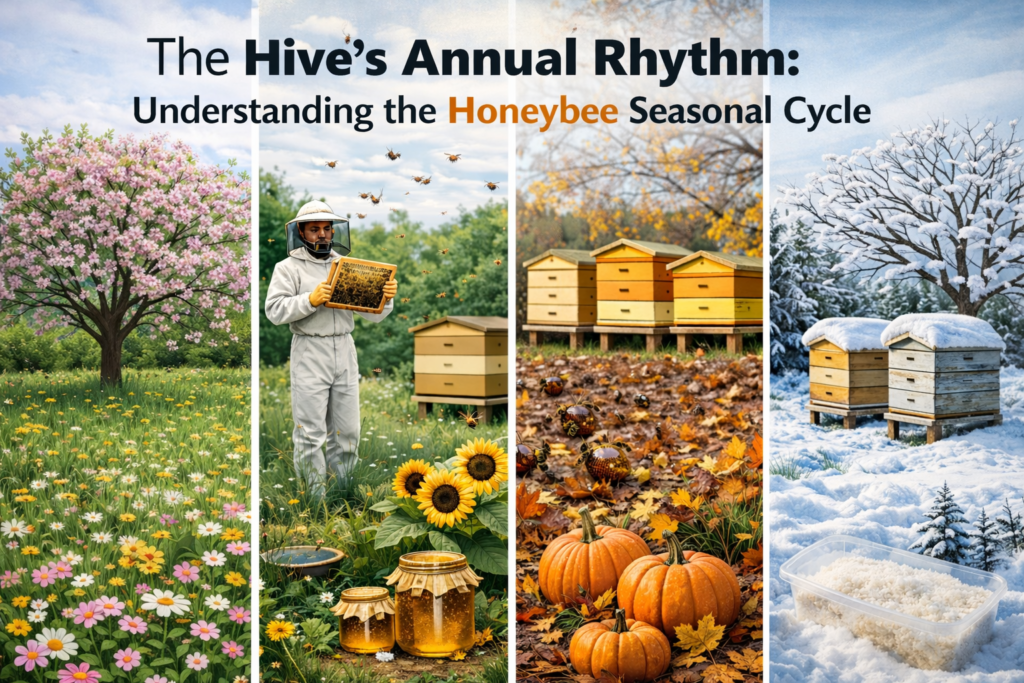
2. The Hive’s Annual Rhythm: Understanding the Honeybee Seasonal Cycle
I’ve always found it helpful to think of the seasonal management of honey bees as a giant wave that builds up in the spring, crashes in the summer, and recedes in the winter. I honestly believe that you can’t master seasonal management of honey bees without first respecting this biological “clock” that dictates every move the bees make. From my experience, a colony isn’t just a collection of insects; it’s a superorganism that adjusts its birth rates, food consumption, and even the lifespan of individual bees based on the length of the day and the temperature outside.
When you look at the honeybee seasonal cycle, you’ll notice four distinct phases that every beekeeper needs to recognize:
- The Build-Up (Late Winter/Spring): This is when the Queen ramps up egg-laying to create a massive workforce in time for the first major flowers.
- The Peak (Summer): The colony reaches its maximum population, often upwards of 60,000 bees, all focused on the “gold rush” of nectar collection.
- The Transition (Autumn): The hive begins to shrink, drones are evicted to save food, and the bees start producing “winter bees” with higher fat reserves.
- The Dormancy (Winter): The colony forms a tight cluster to conserve heat, surviving entirely on the honey they stored during the summer month
Understanding this rhythm is the foundation of effective honeybee colony management. I’ve seen many beginners get frustrated because their bees aren’t doing what they want, but usually, it’s just because they are fighting against the natural honeybee seasonal cycle. When you learn to time your inspections and treatments to match these phases, you stop being an intruder in the hive and start being a partner in their success.
3. Spring Awakening: Kickstarting Colony Growth and Brood Development
I’ve always felt that the first warm day of the year is the most critical moment for seasonal management of honey bees, as it marks the official transition from survival to expansion. This “Spring Awakening” is the period where you must kickstart bee colony growth by ensuring the Queen has enough room and protein to ramp up her egg-laying. From my experience, the biggest risk here isn’t just the cold, but “spring dwindle,” where old winter bees die off faster than new brood can emerge. To prevent this, successful seasonal management of honey bees often involves providing supplemental pollen patties or light sugar syrup to mimic a natural nectar flow, which stimulates the colony to build up its population quickly. By focusing on aggressive brood development early on, you ensure that your hive reaches its peak strength exactly when the major honey flow begins.

4. Mastering the Swarm: Advanced Swarm Management for Growing Colonies
I honestly believe that seeing a swarm cloud leave your apiary is one of the most bittersweet sights in beekeeping—it means your colony was incredibly healthy, but it also means you’ve just lost half your honey-producing workforce. Mastering swarm management in honeybee colonies is all about staying ahead of the bees’ natural urge to reproduce by splitting the colony. From my experience, the secret lies in “reading” the hive; once you see swarm cells being built along the bottom of the frames, the clock is ticking. Effective seasonal management of honey bees during this peak growth phase requires you to create “artificial swarms” or splits, which tricks the bees into thinking they’ve already swarmed while allowing you to double your hive count and keep your honey-making team intact.
To stay in control of your honey bee colonies during the swarming season, you should focus on these three high-impact techniques:
- Checkerboarding: This involves alternating empty drawn combs with full honey combs above the brood nest to break the “honey cap” and give the bees a sense of endless upward space.
- The Split Method: If the hive feels congested, move the old Queen and a few frames of brood into a new box. This immediately relieves the pressure and satisfies their biological drive to expand.
- Requeening: From my experience, younger Queens are much less likely to swarm than older ones, so keeping your genetics fresh is a brilliant long-term strategy for seasonal management of honey bees
If you can master these prevention methods, you’ll find that your seasonal management of honey bees becomes much less stressful. I’ve seen colonies that were managed properly produce three times as much honey as those that were allowed to swarm and start over. It’s all about giving them the space they crave before they decide to go looking for it in a neighbor’s tree!
5. The Summer Rush: Maximizing Honey Production and Making Space
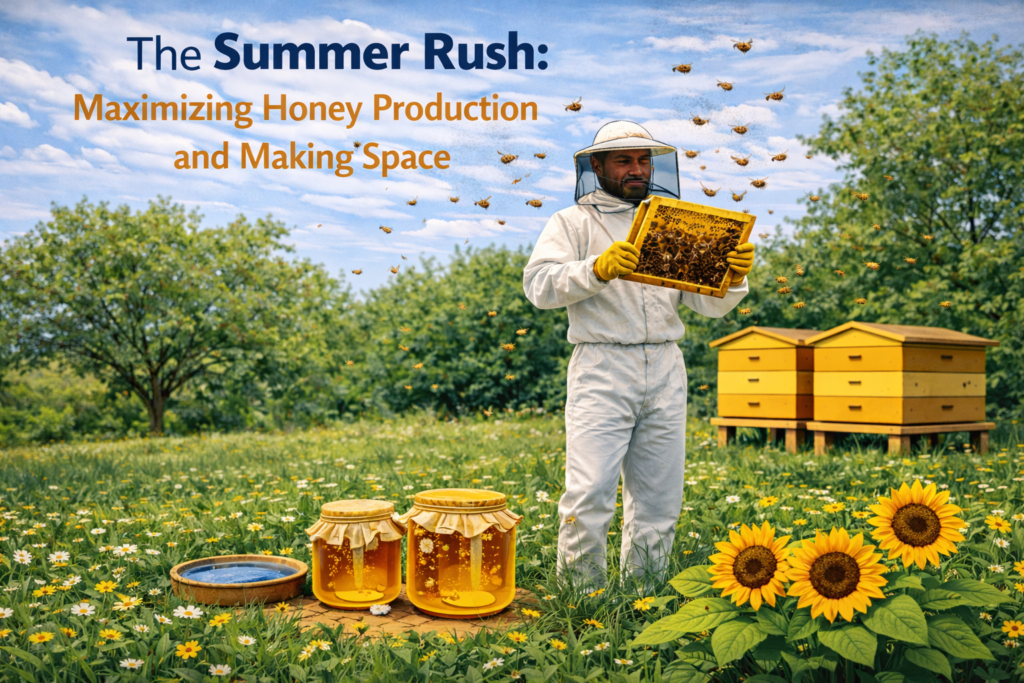
I’ve always said that the “Summer Rush” is the moment of truth in seasonal management of honey bees, where your hard work in the spring finally pays off in the form of a heavy honey harvest. This is the period of maximum honey production, and your primary role in seasonal management of honey bees shifts toward providing enough vertical space—a process known as “supering”—to prevent the bees from feeling congested. From my experience, if the bees run out of room to store nectar, they will begin to backfill the brood nest, which can shut down the Queen’s laying and trigger a late-season swarm. By staying ahead of the flow and adding honey supers as soon as the previous one is 70% full, you ensure that your honey bee colonies remain focused on foraging and maximizing every drop of nectar available before the summer sun begins to fade the flowers.
6. Beating the Heat: Summer Challenges in Honeybee Colony Management
I honestly believe that summer is the ultimate test of a beekeeper’s ability to keep their cool, as high temperatures can be just as dangerous to honey bee colonies as the winter cold. Effective seasonal management of honey bees during a heatwave focuses on two things: ventilation and hydration. From my experience, a colony can spend half its energy just fanning their wings to cool the hive, which takes away from their foraging time; you can help them by ensuring they have a reliable, nearby water source and by opening up screened bottom boards or providing top-ventilation. If you don’t prioritize these honeybee colony management steps, the wax can actually soften, and the brood can overheat, leading to a stressed and unproductive hive.
7. The Autumn Transition: Preparing for Successful Honeybee Overwintering
I’ve always felt that the “Autumn Transition” is the most critical turning point in seasonal management of honey bees, as the decisions you make now determine who survives until spring. During this phase, your honeybee colony management must shift from harvesting honey to ensuring the hive has a massive “fuel tank” of stores and a healthy population of long-lived “winter bees” who have higher fat reserves. From my experience, the secret to successful honeybee overwintering is a ruthless assessment of queen health and mite levels; a weak colony or a high parasite load in October almost guarantees a dead hive by February. By consolidating the brood nest, providing heavy sugar syrup if stores are low, and ensuring the bees have a compact, well-provisioned home, you give your honey bee colonies the best possible chance to withstand the coming freeze.
8. Winter Survival: Protecting Your Honeybee Colonies Through the Cold
I honestly believe that winter is when the true grit of a beekeeper is tested, as your role shifts from an active manager to a silent guardian. Successful honeybee overwintering depends on your ability to protect the cluster from its two greatest enemies: moisture and starvation. From my experience, more bees die from dampness than from the cold itself; without proper ventilation, the bees’ own breath condenses on the lid and drips back down as freezing water, which can be fatal. Strategic seasonal management of honey bees in winter involves installing moisture quilts, ensuring the hive is tilted slightly forward for drainage, and performing “heft tests” to check food weight without opening the box. By keeping the hive dry and providing emergency fondant if the weight is low, you ensure your honeybee colony management remains effective through the coldest months of the year.
9. The Bridge Period: Late Winter Checks and Early Spring Expansion
l’ve always found that “The Bridge Period” is the most dangerous time for a hive, as it’s the narrow window where the bees are most likely to starve just as the finish line is in sight. During this phase of seasonal management of honey bees, the Queen begins to lay eggs again, which causes the colony to consume their remaining honey stores at an alarming rate to keep the brood warm. From my experience, your honeybee colony management must focus on “emergency” feeding with fondant or sugar candy if the weather is still too cold for liquid syrup. This is also the ideal time for early survival checks—if you see bees bringing in the first bits of pollen on a sunny day, it’s a great sign that your honey bee colonies have successfully navigated the winter and are ready for the rapid expansion of the coming spring.
10. Pro-Level Planning: Sustainable Best Practices for Long-Term Success
I honestly believe that “pro-level” beekeeping is defined by the quality of your records rather than the size of your harvest. Sustainable honeybee colony management requires a long-term view where you document every inspection, treatment, and bloom date to build a personalized roadmap for your specific apiary. From my experience, the most successful seasonal management of honey bees happens when you stop guessing and start predicting—using your past notes to choose the best apiary sites and time your swarm controls perfectly. By prioritizing sustainability through careful queen breeding and habitat conservation, you aren’t just managing honey bee colonies for one good year; you’re building a resilient, high-production system that can thrive for decades.
11. Conclusion: The Reward of Year-Round Honeybee Colony Care
I’ve always felt that the true reward of beekeeping isn’t just the honey in the jars, but the deep satisfaction of knowing you’ve successfully guided a superorganism through its entire life cycle. By committing to the seasonal management of honey bees, you transform from a passive observer into a skilled steward of nature, capable of turning environmental challenges into opportunities for growth. From my experience, the consistency of your honeybee colony management—from the first spring inspection to the final winter wrap—is what separates a struggling hive from a thriving one. Ultimately, when you align your actions with the natural honeybee seasonal cycle, you ensure the health and longevity of your honey bee colonies, securing a productive and sustainable future for your apiary.
12. FAQs: Quick Solutions for Seasonal Management Challenges
1. What is the “70% Rule” for adding honey supers? The 70% rule is a staple of honeybee colony management. When you see that seven out of ten frames in your top box are drawn out and filled with nectar or brood, it’s time to add the next super. If you wait until it’s 100% full, the bees will feel “honey-bound,” and that congestion often triggers a swarm, even in the middle of a great flow.
2. Can I open my hive for a survival check in the dead of winter? I strongly advise against a full inspection if the temperature is below 10°C (50°F). Opening the hive releases the heat the cluster has worked so hard to generate. Instead, use the “heft test” by lifting the back of the hive; if it feels heavy, they have food. If you must check, just pop the lid for 10 seconds to see if the cluster is alive and has sugar stores within reach.
3. Why are my bees “bearding” on the outside of the hive in summer? Bearding—when bees hang in a clump outside the entrance—is usually just their way of regulating the temperature inside. They are trying to reduce the body heat within the hive to protect the brood. To help your honey bee colonies, ensure they have a water source nearby and consider adding a screened bottom board to improve airflow.
4. When is the best time to perform a colony split for swarm prevention? From my experience, the “sweet spot” is in mid-spring, just as the first major nectar flow starts and you see the first signs of drone brood. Splitting too early can chill the brood, while splitting after you see capped queen cells is often too late—the old queen may have already left. Timing your seasonal management to the “Pre-Swarm” window is key.
5. How much honey should I actually leave for the bees in the autumn? This depends heavily on your climate, but a good rule of thumb for honeybee overwintering is to leave at least 60–80 lbs (roughly one full deep super) of honey. It’s always better to leave too much than too little. Remember, the bees won’t waste it; whatever they don’t eat in the winter will give them a massive head start for the spring build-up.


