
The endocrine system of insects is a sophisticated network of specialized glands and neurosecretory cells that function as the chemical “software” governing almost every biological process in the organism. Unlike the nervous system, which relies on rapid electrical impulses for immediate responses, the endocrine system utilizes hormones—chemical messengers secreted directly into the hemolymph (insect blood)—to coordinate long-term activities such as growth, development, and metabolic homeostasis. In the scientific study of life, understanding this system is crucial for grasping how an insect transitions from a simple larva into a complex, winged adult, a process that requires precise timing and flawless execution.
In 2026, research into the endocrine system of insects has expanded beyond basic molting studies to explore how environmental stressors like climate change, microplastics, and endocrine-disrupting chemicals (EDCs) impact global biodiversity. This system is not a collection of isolated organs; rather, it is a highly integrated neuroendocrine complex where the brain acts as the primary sensory processor, translating external cues—such as photoperiod (day length), temperature, and nutritional availability—into hormonal signals. For entomologists and agricultural researchers, the endocrine system of insects represents the most effective target for modern, species-specific pest control strategies that minimize harm to beneficial organisms like honey bees.
The fundamental components of the endocrine system of insects include neurosecretory cells, the corpora cardiaca, the corpora allata, and the prothoracic glands. Together, these structures produce the “Big Three” hormones—Prothoracicotropic Hormone (PTTH), Ecdysone, and Juvenile Hormone (JH)—which orchestrate the life cycle. The coordination between these glands is managed via the hemolymph, where hormones are transported to target tissues containing specific receptors. As we dive into the chemical architecture of these organisms, we find that the endocrine system of insects is a marvel of evolutionary efficiency, allowing these creatures to survive and adapt in nearly every habitat on Earth.
The Neuroendocrine Blueprint: Glands and Secretary Organs
The architecture of the endocrine system of insects is centered around the brain and its associated glands. This “Neuroendocrine Axis” is responsible for sensing the environment and translating those signals into a chemical response through a series of glandular interactions.
The Brain as the Master Controller: Neurosecretory Cells (NSCs)
In the endocrine system of insects, the brain is more than just a cluster of neurons; it is a vital endocrine organ. Specialized neurons known as Neurosecretory Cells (NSCs) are located primarily in the pars intercerebralis and pars lateralis of the brain. These cells are unique because they possess the dual characteristics of both nerve cells and endocrine cells—they conduct impulses but also synthesize and release peptide neurohormones. These cells produce a wide range of neuropeptides that regulate everything from heart rate to the initiation of the molting cycle.
H3: Corpora Cardiaca: The Neurohemal Storage and Release Center
Situated just behind the brain and associated with the aorta, the Corpora Cardiaca (singular: corpus cardiacum) serve as “neurohemal organs.” They store the neurohormones produced by the brain’s NSCs and release them into the hemolymph when triggered by nervous stimuli. Additionally, the Corpora Cardiaca contain their own intrinsic secretory cells that produce metabolic hormones like Adipokinetic Hormone (AKH), which mobilizes energy for flight. They act as the primary interface between the nervous system and the circulatory system in the endocrine system of insects.
Corpora Allata: The Factory of Juvenile Hormone
The Corpora Allata are small, paired endocrine glands located behind the corpora cardiaca. Their primary role in the endocrine system of insects is the synthesis and secretion of Juvenile Hormone (JH). This hormone is the “status quo” factor that keeps the insect in its larval or nymphal state during molting. In adult insects, these glands often reactivate to regulate reproductive processes, such as egg development (vitellogenesis) in females and the activity of accessory glands in males.
Prothoracic Glands: Synthesizing the Molting Hormone (Ecdysone)
Located in the thoracic region, the Prothoracic Glands are the primary source of the steroid hormone Ecdysone. These glands are often diffuse and closely associated with the tracheal system to ensure high metabolic activity. They only become active when stimulated by signals from the brain (specifically PTTH), ultimately triggering the process of ecdysis (molting) and the synthesis of a new exoskeleton. In most insects, these glands degenerate once the adult stage is reached, as adults no longer undergo molting.
Key Insect Hormones and Their Regulatory Pathways
Hormonal regulation in insects follows a strict hierarchy. The sequence begins in the brain and cascades through various glands to effect physiological change, ensuring that the insect does not molt prematurely or fail to develop.
Prothoracicotropic Hormone (PTTH): The Developmental Trigger
The first major signal in the endocrine system of insects developmental pathway is PTTH. This neuropeptide is produced by the brain’s NSCs and released via the corpora cardiaca. PTTH acts specifically on the prothoracic glands, “telling” them to begin the production of ecdysone. The release of PTTH is often tied to a “critical weight” or “critical period,” ensuring the larva has enough nutrients to survive the energy-intensive molting process.
Ecdysteroids: The Mechanics of the Ecdysone Molting Hormone
Once stimulated by PTTH, the prothoracic glands release Ecdysone, which is then converted into its active form, 20-hydroxyecdysone (20E), in the peripheral tissues like the fat body. This hormone acts on the epidermis, signaling the start of apolysis (the separation of the old cuticle) and the secretion of a new, larger cuticle. Without ecdysone, the insect would be trapped in its old exoskeleton, leading to death as it grows.
Juvenile Hormone (JH): Maintaining the Immature State
Juvenile Hormone is perhaps the most versatile messenger in the endocrine system of insects. When JH levels are high in the hemolymph, the ecdysone-triggered molt results in another larval or nymphal stage (larval-larval molt). As the insect matures, the corpora allata reduce JH production. When JH levels drop below a specific threshold during the final instar, the ecdysone surge triggers the transition to the pupal or adult stage.
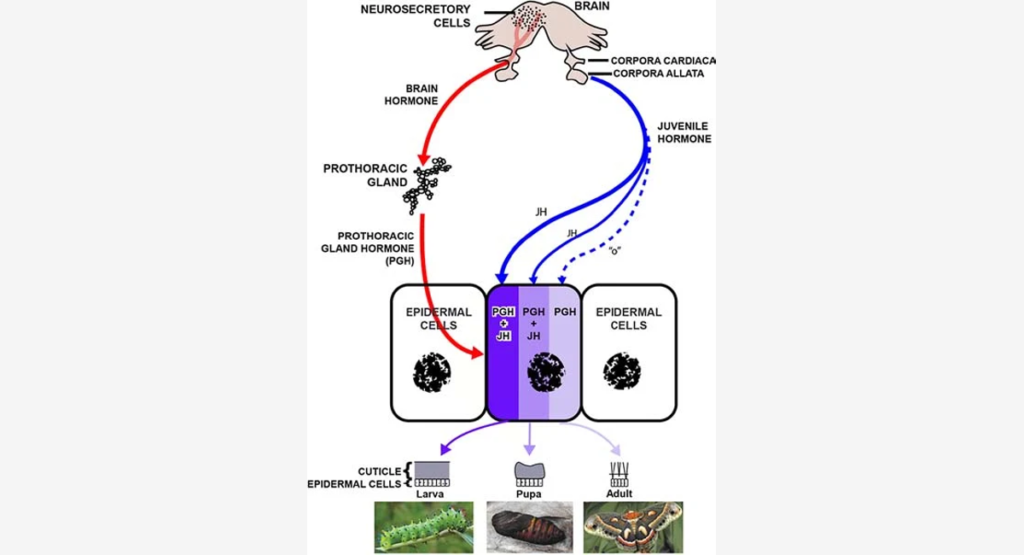
Insect Hormonal Control of Growth and Metamorphosis
Metamorphosis is not a random event but a highly regulated transformation dictated by the specific ratio of hormones in the hemolymph at the time of the molt.
The Interplay of JH and Ecdysone: Determining the Next Instar
The endocrine system of insects relies on a delicate balance between JH and Ecdysone.
- High JH + Ecdysone Surge = Larval-to-Larval molt (the insect grows but stays young).
- Low JH + Ecdysone Surge = Larval-to-Pupal molt (the insect begins its transformation).
- Absent JH + Ecdysone Surge = Pupal-to-Adult molt (the final transition to a reproductive adult). This antagonistic relationship ensures that metamorphosis occurs only when the insect has reached sufficient size and nutritional maturity to support the development of wings and reproductive organs.
Secondary Hormonal Functions: Metabolism and Homeostasis
The endocrine system of insects extends its reach far beyond growth, managing the daily survival of the organism through metabolic and osmotic regulation.
Adipokinetic Hormone (AKH) and Metabolic Regulation
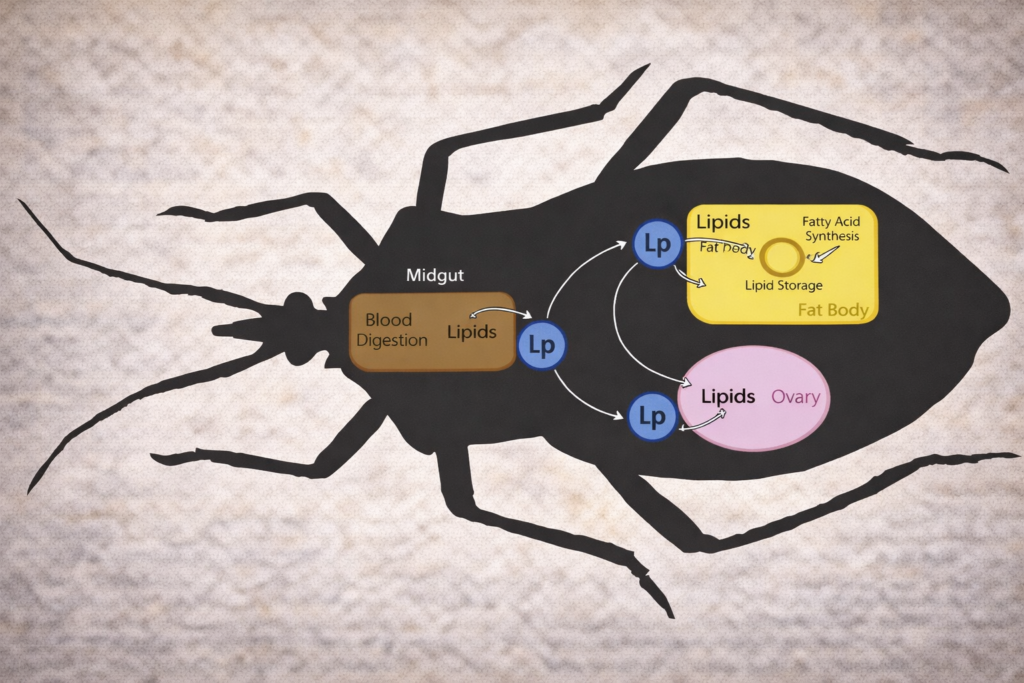
Beyond growth, the endocrine system of insects controls energy. Adipokinetic Hormone (AKH), produced in the corpora cardiaca, acts similarly to mammalian glucagon. It mobilizes lipids and carbohydrates from the fat body (the insect’s liver-equivalent) to power intensive activities like long-distance migration or rapid flight. AKH is essential for insects like locusts or moths that must fly for hours at a time.
Diuretic Hormones: Managing Ion and Water Balance
To survive in arid environments, insects use diuretic and anti-diuretic hormones to regulate water loss and salt balance via the Malpighian tubules and the hindgut. These hormones are critical for maintaining the osmotic pressure of the hemolymph, especially after a large meal or during extreme heat.
The Impact of Environmental Stressors on Insect Hormonal Regulation
The environment plays a massive role in how the endocrine system of insects functions. External signals act as the “input” for the neuroendocrine computer.
Endocrine Disruptors: Modern Challenges in 2026 Pest Management
Modern pesticides, often called Insect Growth Regulators (IGRs), work by mimicking or blocking the hormones in the endocrine system of insects. For example, methoprene mimics Juvenile Hormone, preventing larvae from ever reaching adulthood and reproducing. In 2026, identifying how anthropogenic pollutants interfere with these pathways is a high-priority area for conservation biology, as many of these chemicals can inadvertently affect non-target species.
Conclusion: The Future of Endocrine-Based Insect Control
The endocrine system of insects remains the most reliable physiological map for understanding these diverse organisms. By mastering the intricate dance between neurosecretory signals and glandular secretions, scientists can develop sustainable solutions for pest control and ecosystem management. As we look toward the future of entomology in 2026, the study of the endocrine system of insects will continue to reveal the remarkable chemical complexity that allows these creatures to dominate the natural world.
FAQs: Common Questions on the Insect Endocrine System
- What is the main function of the endocrine system of insects? It regulates growth, molting, metamorphosis, reproduction, and metabolism.
- Which gland produces the molting hormone? The prothoracic glands produce ecdysone.
- What does Juvenile Hormone (JH) do? It maintains the insect’s juvenile state and prevents premature metamorphosis.
- How does the brain control the endocrine system? Through Neurosecretory Cells (NSCs) that produce neurohormones like PTTH.
- What happens if JH is absent during a molt? The insect will skip juvenile stages and attempt to metamorphose into an adult.
