
In the scientific study of life, few structures are as engineeringly perfect as the arthropods morphology. Representing the most successful body plan in the history of the animal kingdom, these organisms have dominated every corner of the globe for over 500 million years. By understanding the biological blueprint that defines this phylum, we can see how a combination of external armor, specialized segments, and jointed limbs creates a versatile platform capable of surviving extreme deep-sea pressures, arid deserts, and high-altitude flight.
At the core of the arthropod morphology is the revolutionary development of the chitinous exoskeleton. This rigid outer shell provides the necessary structural support for life on land while acting as a sophisticated suit of armor against predators and environmental hazards. Unlike the internal skeletons of vertebrates, this external frame serves as the direct attachment point for muscles, allowing for incredible leverage and strength-to-weight ratios. However, this blueprint requires a unique growth strategy known as ecdysis, where the organism must periodically shed its restrictive shell to allow the soft tissue beneath to expand.
Beyond the protective shell, the true genius of the arthropod morphology lies in its modularity. Through a process called tagmosis, individual body segments are fused into functional regions—the head, thorax, and abdomen—each specialized for specific tasks such as sensory processing, locomotion, or reproduction. This “Swiss Army Knife” approach to anatomy allows different species to adapt their jointed appendages into everything from high-speed swimming paddles and delicate sensory antennae to powerful crushing mandibles, ensuring their continued dominance in the 2026 global ecosystem.
Engineering Resilience: The Mechanics of the Arthropod Body Plan
In the scientific study of life, the enduring success of the phylum Arthropoda is attributed to a body plan that functions like a high-performance machine. This engineering resilience is built upon a modular architecture, allowing for a diverse range of arthropod anatomical features to adapt to almost every environment on Earth. By examining the geometry and material science of their structure, we can see how these organisms maintain a perfect balance between protection and agility.
Bilateral Symmetry: The Geometry of Efficient Movement
Bilateral symmetry is the foundational geometric principle of the arthropod body plan. By dividing the body into identical left and right halves, arthropods achieve a streamlined shape that is essential for directional movement. This symmetry facilitates “cephalization,” the concentration of sensory organs and nervous tissues at the anterior end (the head). This arrangement allows the organism to process environmental data—such as detecting prey or avoiding predators—immediately as it moves forward, ensuring a rapid and coordinated motor response.
Tagmosis: How Segmented Bodies Evolve into Functional Regions
The true modular power of arthropod morphology lies in tagmosis. While their ancestors were composed of many identical segments, modern arthropods have evolved by fusing these segments into specialized functional units called “tagmata.” Typically organized into a head, thorax, and abdomen, each region serves a distinct purpose: the head for sensory input and feeding, the thorax for locomotion (housing wings and legs), and the abdomen for digestion and reproduction. This division of labor allows each body region to reach peak efficiency without compromising the performance of the others.
The Chitinous Exoskeleton: Structural Armor and Muscle Attachment
The most iconic of all structural features of arthropod is the chitinous exoskeleton. This multi-layered cuticle, composed of chitin and proteins, serves as both a protective shield and a complex mechanical frame. Unlike human bones, which are internal, the arthropod’s “skeleton” is on the outside, providing a vast surface area for internal muscle attachment. This “leverage-based” system allows for incredible bursts of power and speed. Furthermore, the exoskeleton is waterproof, preventing desiccation (drying out) in terrestrial environments, which was a key factor in their successful colonization of land millions of years ago.

The High-Stakes Growth Cycle: Ecdysis and Molting
In the scientific study of life, the most significant limitation of a rigid external frame is that it cannot expand as the organism grows. This creates a biological paradox: the very armor that ensures survival also acts as a prison. To overcome this, the arthropod body plan incorporates a high-stakes process of transformation that is both a mechanical necessity and a period of extreme physical danger.
Breaking the Mold: Why Arthropods Must Shed Their Armor
Because the chitinous exoskeleton is a non-living secretion, it does not grow alongside the internal tissues. As an arthropod increases in mass, it eventually fills every cubic millimeter of its current shell, triggering the process of ecdysis. Controlled by a complex hormonal cascade, the organism begins to secrete a new, flexible cuticle beneath the old one while simultaneously releasing enzymes to digest the inner layers of the existing frame. This “breaking of the mold” is a precision-timed event where the old exoskeleton splits along predetermined lines of weakness, allowing the animal to literally crawl out of its own skin.
The Physiology of Soft-Shell Vulnerability during Molting
Immediately following ecdysis, the arthropods enters its most perilous life stage. The newly exposed cuticle is soft and wrinkled, lacking the calcification or sclerotization required for defense or structural support. During this window of “soft-shell vulnerability,” the animal is unable to run, fly, or fight effectively, as its muscles have no rigid surface to pull against. To reach its next size, the arthropod must rapidly intake water or air to “inflate” the new shell before it hardens. This transition period is a critical aspect of arthropod morphology, as any disturbance during the hardening process can lead to permanent physical deformities or death from predation.
Specialized Anatomical Features: The Tools of Survival
In the scientific study of life, the true mechanical genius of the phylum is found in its modular “toolkit.” These arthropod anatomical features are not merely passive structures; they are highly engineered biological instruments designed for maximum environmental interaction. From the hydraulic-like precision of a jumping spider’s leg to the panoramic data stream of a dragonfly’s eye, these features represent the peak of invertebrate evolution.
Jointed Appendages: Biomechanical Adaptations for Locomotion and Feeding
The name “Arthropod” literally means “jointed foot,” which remains the most defining characteristic of the arthropods body plan. These appendages are composed of a series of hollow, rigid tubes connected by flexible “arthrodial” membranes, acting as a complex system of levers. Through millions of years of adaptation, these limbs have been modified into an incredible array of tools:
- Locomotion: Specialized for walking, high-speed running, swimming, or jumping.
- Feeding: Modified into powerful crushing mandibles, delicate piercing needles (as seen in mosquitoes), or sophisticated “fans” for filter feeding.
- Defense: Evolved into formidable pincers or raptorial claws for striking prey.
Sensory Architecture: Compound Eyes, Antennae, and Chemical Receptors
To manage such a complex body, arthropods require a high-fidelity sensory network. Their “head” tagma serves as a centralized data processing hub, housing several critical structural features of arthropods:
- Compound Eyes: Consisting of thousands of individual visual units called ommatidia, these provide a wide-angle, mosaic view of the world and are exceptionally sensitive to motion and polarized light.
- Antennae: These serve as primary “data receivers,” equipped with chemo-receptors to “smell” pheromones and food, as well as mechano-receptors to detect air currents and vibrations.
- Sensory Setae: Tiny, hair-like structures found across the exoskeleton that can detect the slightest change in pressure or chemical composition, allowing the insect to “feel” its environment through its armor.

Internal Infrastructure: Supporting the External Frame
While the arthropods morphology is often defined by its rigid exterior, its internal systems are equally specialized to support high-energy activities like flight and rapid predation. In the scientific study of life, these internal “logistics” networks are viewed as highly efficient solutions for transporting nutrients and oxygen through a body plan that lacks the closed pressurized veins of vertebrates.
Open Circulatory Systems: Logistics of Nutrient Transport
Unlike humans, arthropods possess an open circulatory system where a heart pumps fluid called “hemolymph” into an open body cavity known as the hemocoel. This fluid directly bathes the internal organs, delivering nutrients and hormones while removing waste. This “low-pressure” system is a core feature of the arthropod body plan, as it requires less metabolic energy to maintain than a closed system. Hemolymph also plays a mechanical role; in many species, it acts as a hydraulic fluid, providing the pressure needed to extend legs or expand wings after molting.
Respiratory Adaptations: Gills, Tracheae, and Book Lungs
To fuel their active lifestyles, arthropods have evolved diverse arthropods anatomical features for gas exchange, depending on their specific environment:
- Tracheae: Terrestrial insects use a network of tiny, air-filled tubes that deliver oxygen directly to every cell in the body, bypassing the blood entirely for maximum speed.
- Gills: Aquatic species, such as crabs and lobsters, utilize feathery, high-surface-area gills to extract oxygen from the surrounding water.
- Book Lungs: Many arachnids possess stacked, leaf-like structures that resemble the pages of a book, providing a protected internal chamber for gas exchange while minimizing water loss.
Evolutionary Success: Why This Body Plan Dominates the Planet
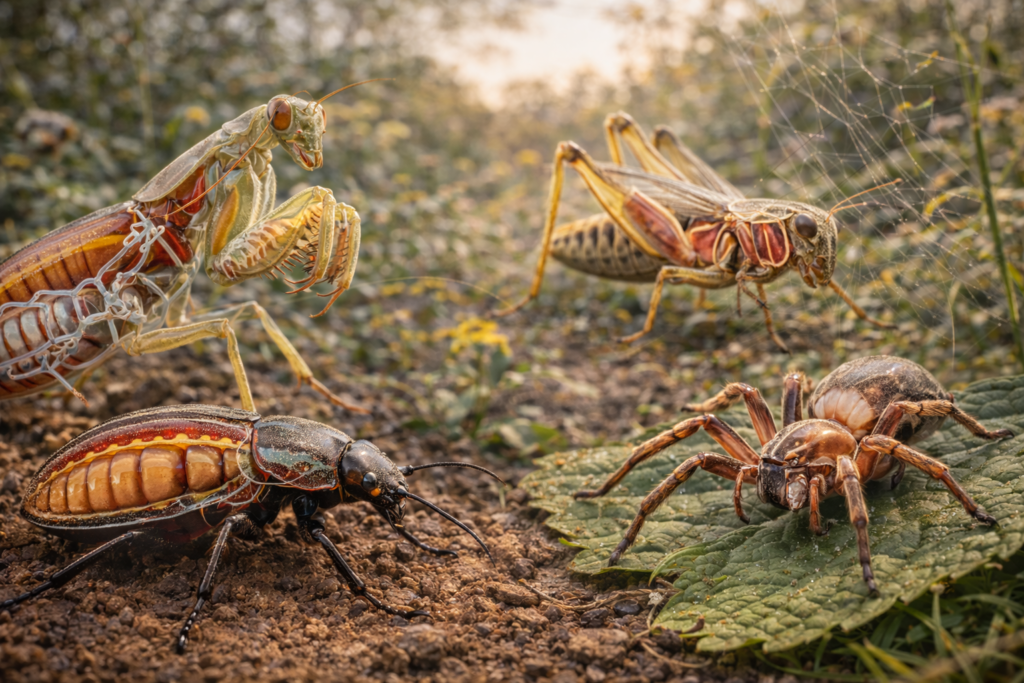
In the scientific study of life, the unparalleled success of the phylum Arthropoda is attributed to a highly modular arthropod body plan that allows for “specialization without compromise.” By combining a protective, waterproof exoskeleton with segmented tagmosis, these organisms have managed to colonize every habitat on Earth, from deep-sea vents to high-altitude mountain ranges. This structural flexibility means that a single pair of jointed appendages can evolve into wings, crushing mandibles, or delicate swimming paddles without disrupting the core survival functions of the rest of the body. In 2026, evolutionary biologists point to this “Swiss Army Knife” morphology as the primary reason arthropods account for over 80% of all known animal species, proving that their biological blueprint is the most durable and successful design in history.
Conclusion: Mastering the Morphological Features of Arthropods
In the scientific study of life, mastering the structural nuances of arthropod morphology reveals a blueprint of biological engineering that has remained virtually unrivaled for millions of years. From the high-tensile strength of the chitinous exoskeleton to the mechanical precision of jointed appendages, every feature of the arthropod body plan is optimized for survival and environmental dominance. As we look toward the innovations of 2026, these anatomical features continue to inspire human technology in fields ranging from robotics to material science, proving that the ancient “hardware” of the insect and crustacean world is still the gold standard for efficiency. By understanding these systems, we gain not only a deeper respect for the planet’s most diverse phylum but also a toolkit for solving the complex engineering challenges of the future.
FAQs: Common Questions on Arthropod Structure and Anatomy
- What is the primary material of the arthropod exoskeleton? The exoskeleton is composed of a tough, nitrogen-containing polysaccharide called chitin, often embedded in a matrix of proteins. In many marine species, like crabs, this matrix is further reinforced with calcium carbonate, creating a rigid armor that provides both structural support and protection from predators.
- Why do arthropods have jointed appendages? Because their “skeleton” is on the outside, they require flexible joints to move. These appendages are essentially a series of rigid tubes connected by soft, flexible membranes. This design allows for a “lever-and-pulley” system of muscle attachment, providing the mechanical advantage needed for high-speed running, jumping, or crushing prey.
- How does an open circulatory system differ from a human’s? Unlike the closed “piping” of human veins, the arthropod body plan utilizes an open system where a heart pumps hemolymph into a cavity called the hemocoel. The internal organs are directly “bathed” in this fluid. This is highly efficient for small organisms, as it requires less metabolic energy to maintain blood pressure.
- What is tagmosis and why is it important? Tagmosis is the evolutionary process where multiple body segments fuse together to form specialized functional regions called tagmata (such as the head, thorax, and abdomen). This specialization allows the head to focus on sensory data and feeding, while the thorax is dedicated entirely to the heavy-duty mechanics of locomotion.
- Do all arthropods breathe the same way? No, their respiratory systems are highly adapted to their specific environment. Terrestrial insects use a “tracheal system” of air tubes, spiders often use “book lungs” (stacked tissue layers), and aquatic crustaceans use “gills” to extract oxygen from water. Each system is designed to maximize gas exchange while preventing the internal organs from drying out.


